.png)
Pope Leo XIV makes an 11 day tour of Africa
L’Africa comincia a Roma.
Africa starts in Rome, they say, when describing Italy’s South.
Chaos unfolds from the Eternal City—downward, through the Mezzogiorno, Sicily, the Mediterranean, and then the entirety of the Dark Continent.
Such is an adage of derision. Northern Italy and the countries that border look down on a people they see forever disorganized in the South.
Strange, then, that Pope Leo XIV—as did his predecessors—takes literally the statement to foster the future of Roman Catholicism.
Africa does indeed start in Rome when it comes to the growth of Catholicism. More than any other continent, Africa has seen the largest and most consistent rate of increase of Catholics in the world.
Pope Leo XIV seizes the opportunity. On April 13, he began an eleven day journey through Africa to push forward the rapid conversion of millions to the faith.
Pope Leo XIV makes an 11 day tour of Africa
⸻
Holy Trek
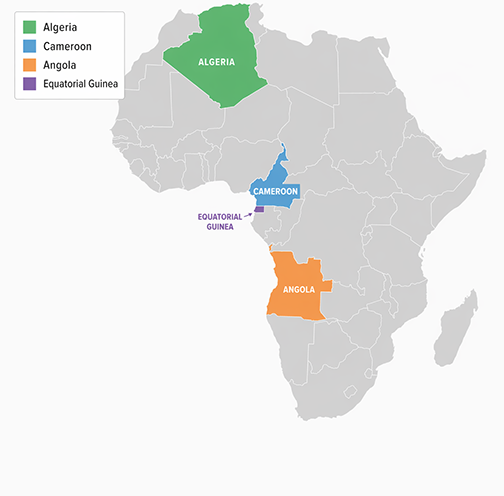
Africa will be the pope’s home until April 23. His travel schedule will include four countries:
Algeria (April 13–15): The historic first-ever papal visit to the country.
Cameroon (April 15–18): The pope will visit the capital, Yaoundé, as well as the cities of Bamenda and Douala.
Angola (April 18–21): The itinerary includes stops in Luanda, Muxima, and Saurimo.
Equatorial Guinea (April 21–23): The final stop before the Pope returns to Rome.
Great cathedrals in Europe stand as monuments to a glorious past. In Africa, the churches are filled with the promise of a dynamic future. The demographic reality is unmistakable: while Mass attendance declines across much of the West, it surges across sub-Saharan Africa.
______
Algeria—Land of Augustine
Pope Leo’s visit to Algeria will be the first of any pope. The largest nation in Africa offers the Vatican an opportunity for continued interfaith dialogue with Islam. The pope will visit the Maqam Echahid monument in Algiers, a symbol of the decades long civil war in the country.
Algeria has almost no Catholics—just 9,000 among a total population of 35 million, according to a recent census. Algeria, nevertheless, conveys a theme of Catholic conversion. This is the land of Saint Augustine of Hippo.
Born in 354 A.D. in what is now Algeria, Augustine served as bishop of Hippo Regius (modern-day Annaba, Algeria). There, he wrote some of the most influential works in Christian history, including Confessions and The City of God.
Before he became the lead thinker of early Christianity, Augustine was a young, ambitious politician who followed the pagan precepts of Rome. His mother, Monica, also a saint, prayed daily for his conversion until the time came when Augustine became a follower of Christ.
While in Algeria, Pope Leo will visit the ruins of Hippo and say Mass at the Basilica of Saint Augustine in Annabe.
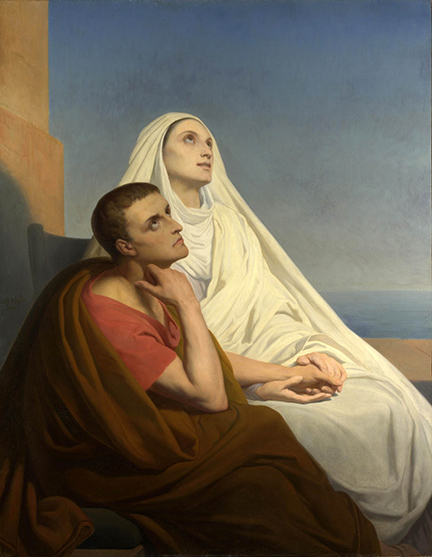
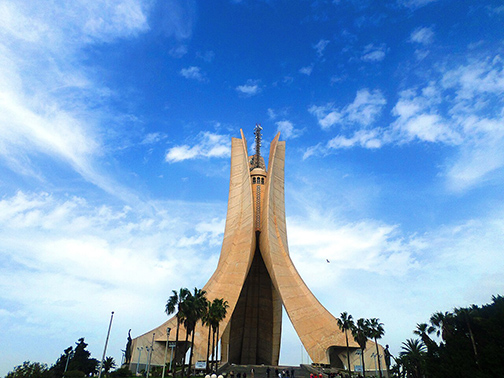
Picture of Saint Augustine with his mother, Saint Monica. A photograph of the Maqam Echahid monument in Algiers
⸻
Cameroon Ceasefire
After Algeria, Pope Leo will visit Cameroon, in the role of moral arbiter to warring factions in the country. The Vatican seeks a temporary ceasefire in Cameroon between English speaking separatists of the north and the national government; in what is termed the “Anglophone Crisis.”
About 35 percent of Cameroon’s population (31 million) are Catholic. While there, the pope plans to visit the Ngul Zamba Orphanage in Yaoundé and St. Paul Catholic Hospital in Doualato to highlight the Church's commitment to the poor and needy.
______
Angola Apparition
The pope will arrive in Angola, on April 18, a country with a population of 36 million, of which, 44 percent are Catholic.
The theme of the visit will be economic inequality. Angola is a country of oil drilling sites and diamond mines, yet, poverty persists.
Pope Leo will meet with Angola’s president and then convene with the country’s bishops. He will lead a rosary prayer at the Church of Our Lady of Muxima, a site of pilgrimage where an apparition of the Virgin Mary appeared in 1833.
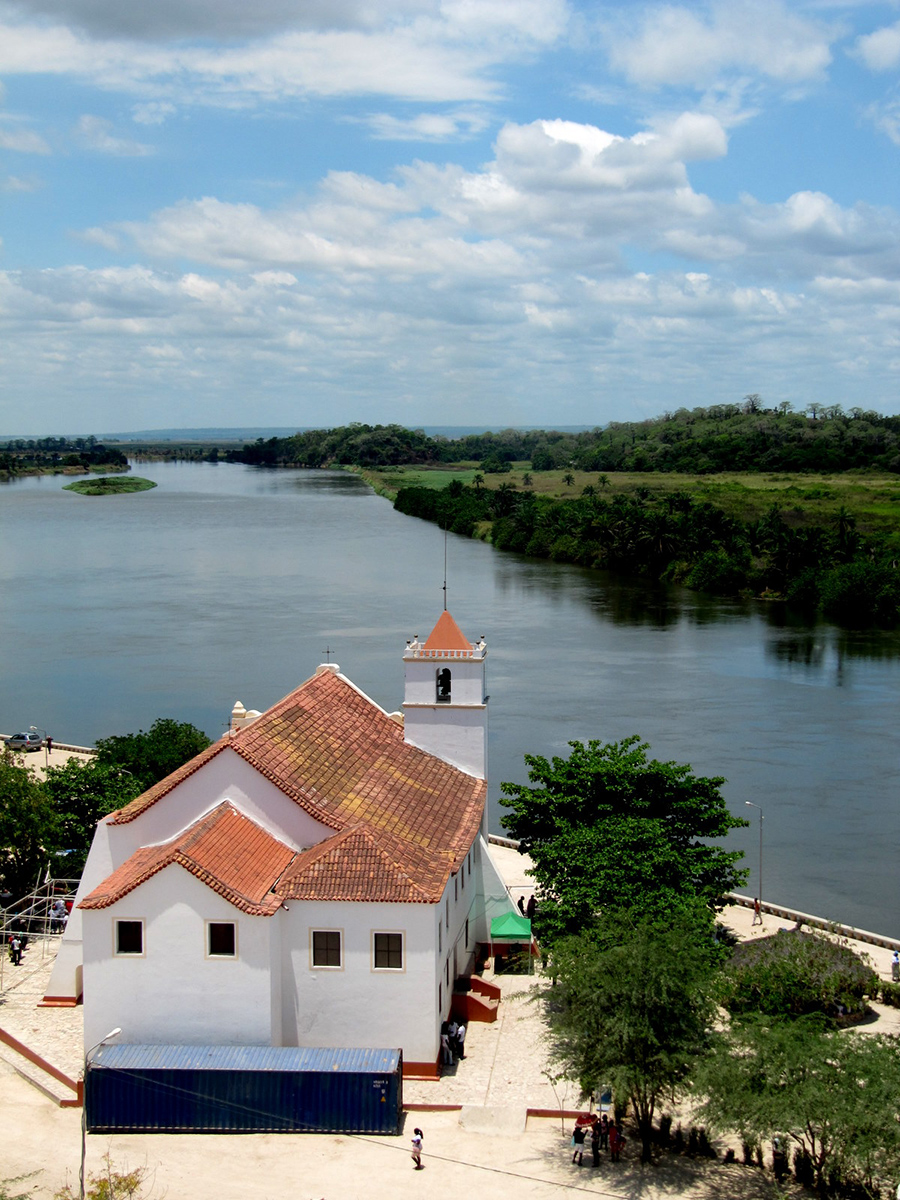
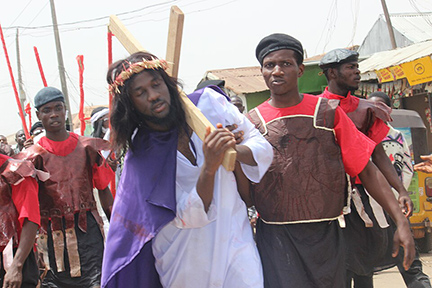
Church of Our Lady of Muxima in Angola and the Passion as shown in Nigeria
⸻
Going to Guinea
Equatorial Guinea is a country of roughly 1.7 million people, almost 90 percent of whom are Roman Catholic.
The first pope to visit there was Pope John Paul II, in 1982.
Rich in natural resources, Equatorial Guinea has been the focus of humanitarian abuses in recent years.
Pope Leo will make a visit to the Bata Prison, a jail complex in Bata, the country’s largest city. Incarcerated there are many political activists who spoke out against the country’s poverty and corruption. The pope’s visit there will highlight conditions to an international audience to put pressure on the local government to reform the prison.
The pope will say an outdoor Mass at Malabo stadium before his departure from African back to Rome.
Leadership within the Church will increasingly reflect African voices. The theological and cultural priorities of Catholicism will evolve accordingly. Rome, ever adaptive, will continue to guide this transformation—less as a distant authority, and more as a partner in a Catholic future in Africa.
Editor’s Note:
The web site for the Vatican is https://www.vatican.va/content/vatican/en.html
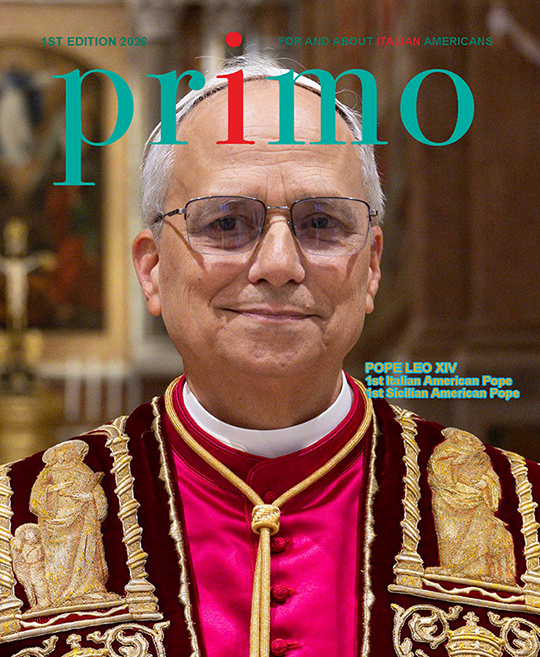
READ HERE THE NEW EDITION - FIRST 2026 PRIMO
—————————————————————————————————————————————————————————————————————————————
Please visit our DVDs Page to shop our latest collection of DVDs on all things Italian: Films from Italy's Golden Age, Documentaries on Italian American life, ancient Rome, and religion.


Please visit our Books' page to review our latest inventory of books on all things Italian: cookbooks, history, art and culture.


Other articles to read...