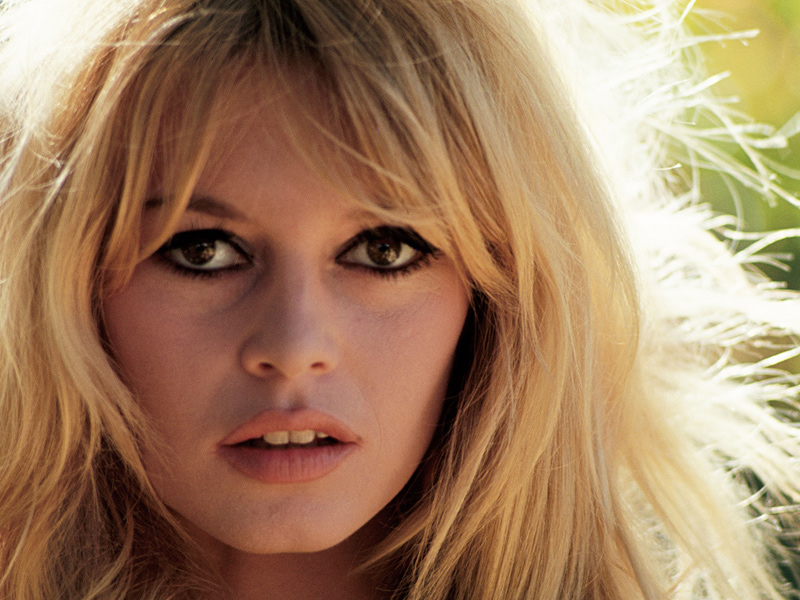
Though inseparable from French cinema, Brigitte Bardot maintained a quiet but important relationship with Italy, one that helped shape both her image and her place in European film history. Long before she became a global symbol of sensual freedom, Italian filmmakers and locations played a decisive role in how Bardot was seen—and remembered—on screen.
⸻
Bella Bionda
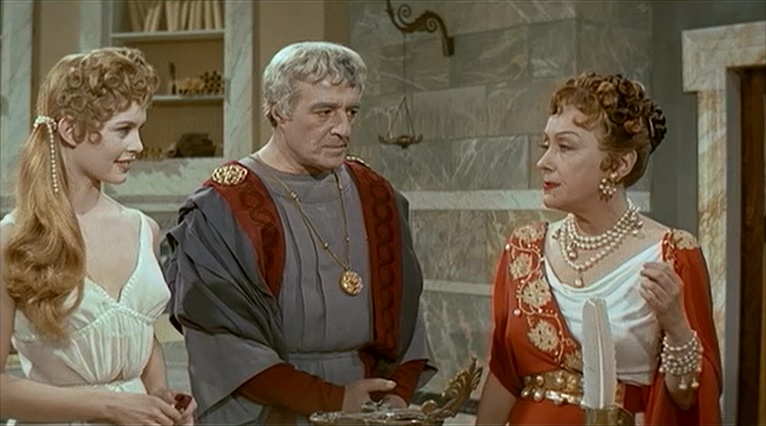
One of the earliest influences came from the Italian director Steno (Stefano Vanzina), who famously advised the young Bardot to dye her hair blonde. Steno had directed her, opposite Alberto Sordi, Vittorio De Sica, and Gloria Swanson in the 1956 film, “Nero’s Mistress.” At the time, Bardot was still a brunette ballet student transitioning into film. The suggestion proved transformative. In an era when Italian popular cinema was deeply attuned to screen contrast, lighting, and international appeal, Steno recognized that Bardot’s look needed to be immediately legible—modern, radiant, and exportable. The blonde image became inseparable from her legend.
_____
Italian Men
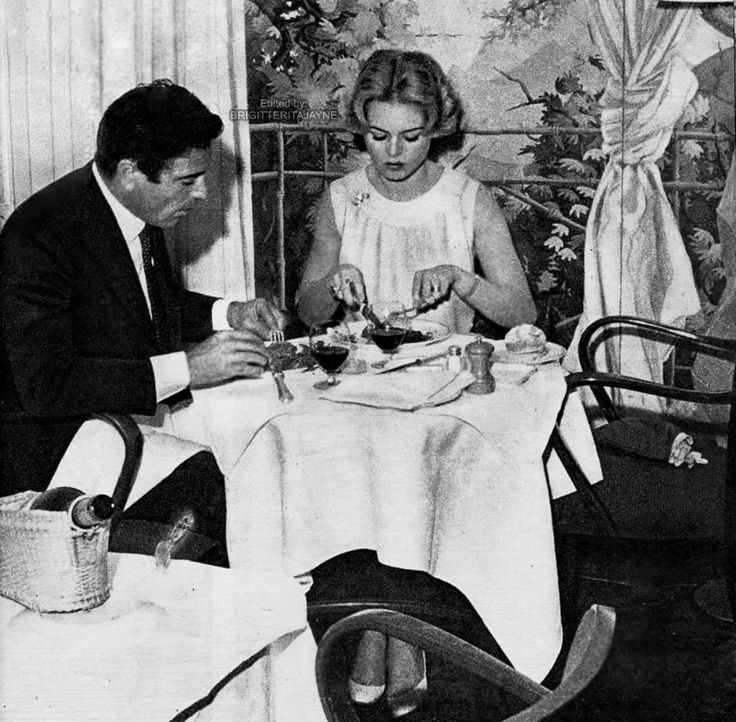
Bardot rose to international stardom, famous for her on-screen and off-screen romances. In the late 1950s, she and Italian actor Raf Vallone were caught in an affair when photographed by the paparazzi in the days of La Dolce Vita. Vallone called off the relationship to return to his wife, Italian actress, Elena Varzi. A decade later, Bardot and Gigi Rizzi, an Italian actor and playboy, were under the romantic spotlight in the Riviera. Their relationship lasted there as long as the tourist season.
⸻
Marcello
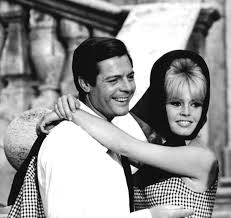
Bardot’s lighter Italian turn came two years earlier in A Very Private Affair (1961), filmed in Rome and co-starring Marcello Mastroianni. In this romantic comedy, Bardot played a commitment-shy Frenchwoman who escaped to Italy, only to find herself drawn into romance once again. Rome appears as a city of flirtation where Mastroianni’s worldly charm balances Bardot’s impulsive energy. The pairing of two European icons at the height of their appeal captured Italy’s cinematic golden age.
⸻
Filming in Capri
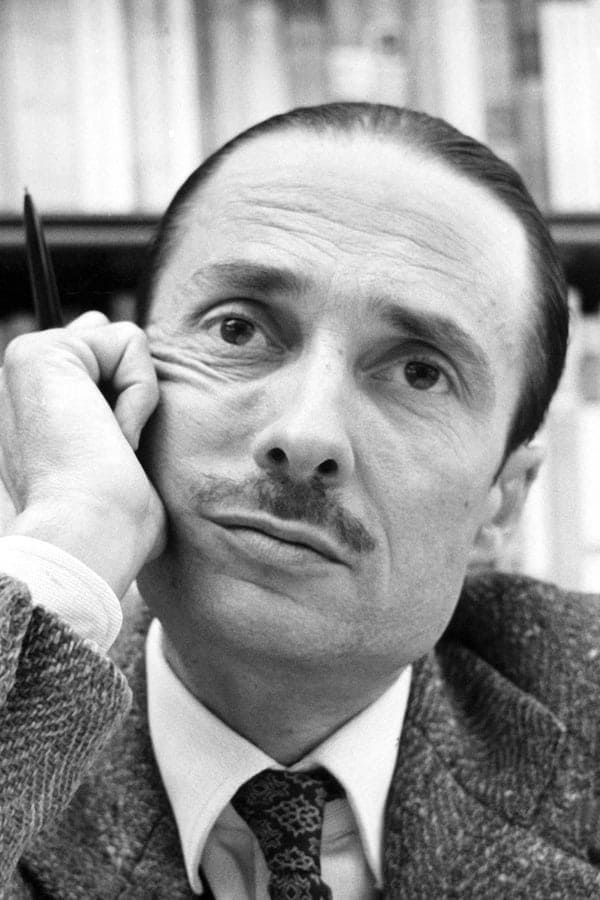
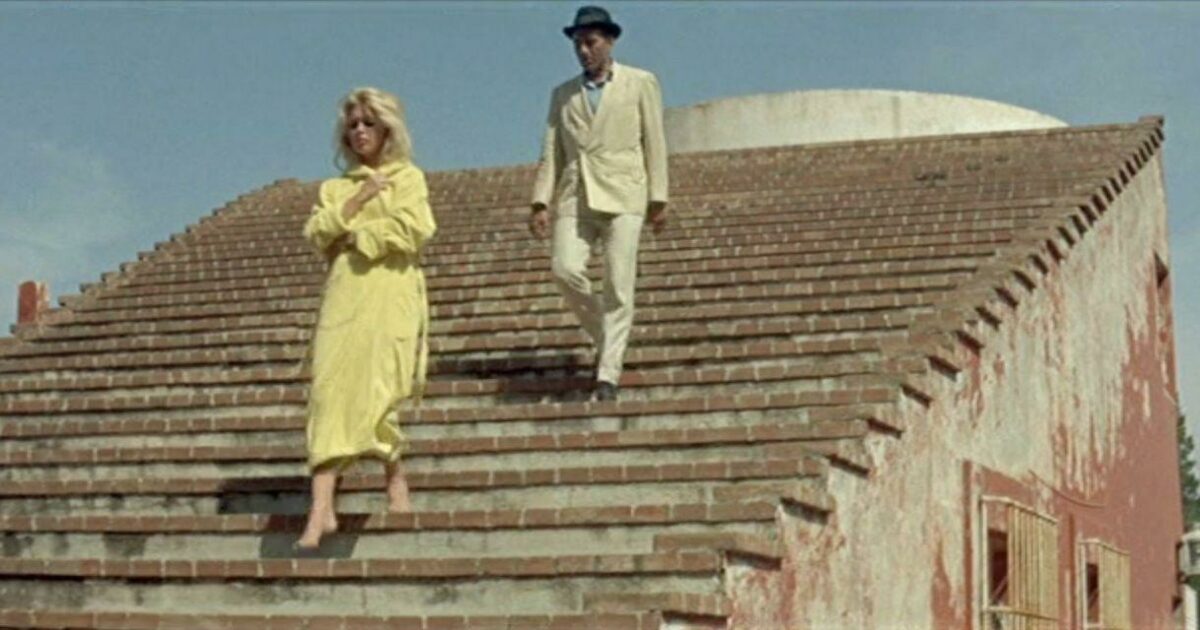
Italy provided Bardot with one of her most enduring cinematic moments in Le Mépris (1963), directed by Jean-Luc Godard. Shot largely at Rome’s Cinecittà Studios and on the island of Capri, the film placed Bardot at the crossroads of European art cinema and commercial filmmaking. Several key scenes were filmed at Casa Malaparte overlooking the Mediterranean. She was presented not as a bombshell but as a modern, enigmatic figure—cool, distant, and existential.
_____
From Poe to Claudia Cardinale
Bardot returned to Italy again, in the late 1960s, to star in the Edgar Allan Poe anthology film Spirits of the Dead. She appeared as a brunette opposite Alain Delon. Her scenes in this film were shot in Bergamo, in Italy’s Lombardia region.
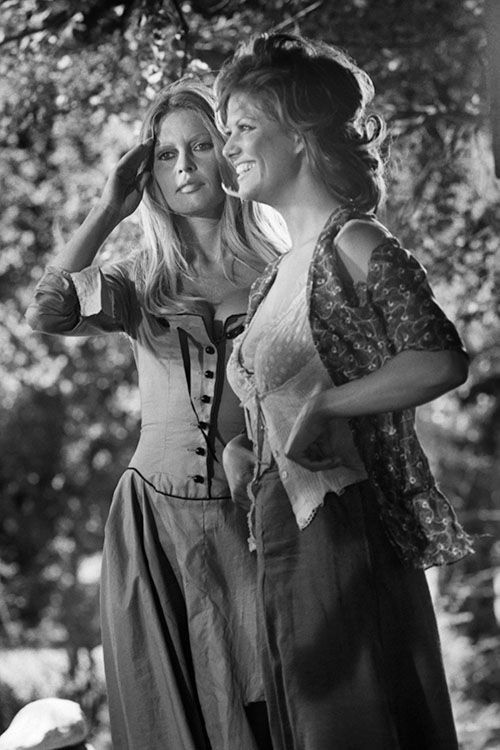
Bardot’s career began to fade in the 1970s. One of her last films paired her with Claudia Cardinale in “The Legend of Frenchie King,” a Western shot mostly in Spain.
Italy did not simply host Brigitte Bardot—the country helped define her. From Cinecittà soundstages to Capri’s cliffs, Italian cinema framed her not just as a symbol of desire, but as a modern European figure shaped by light, architecture, and the Mediterranean imagination. France may have claimed Bardot as its own, but Italy helped make her timeless.
Editor’s Note: Pictured is Brigitte Bardot, starring with Vittorio De Sica and Gloria Swanson in "Nero's Mistress," directed by Steno, who advised her to go full blonde; Bardot seen with Raf Vallone and Marcello Mastroianni and a scene shot in Capris with Michel Piccoli in "Le Mepris" and with Claudia Cardinale in "The Legend of Frenchie King."
You can read PRIMO's issue—where we feature our cover article on Claudia Cardinale at this link: https://www.onlineprimo.com/primo_digital_2nd2025.html
—————————————————————————————————————————————————————————————————————————————
Please visit our DVDs Page to shop our latest collection of DVDs on all things Italian: Films from Italy's Golden Age, Documentaries on Italian American life, ancient Rome, and religion.

Please visit our Books' page to review our latest inventory of books on all things Italian: cookbooks, history, art and culture.
Other articles to read...