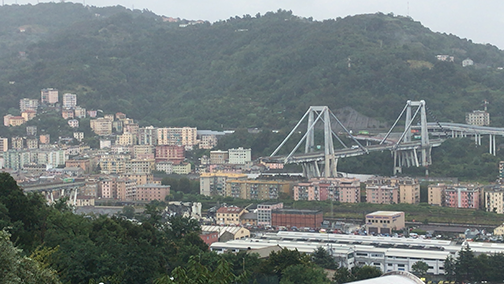
A portion of the Morandi Bridge stayed severed until rebuilt
Eight years after the catastrophic collapse of Genoa's Morandi Bridge claimed 43 lives, an Italian court has delivered one of the most consequential infrastructure verdicts in the nation's history.
In late July, some 32 former executives, engineers, and public officials were convicted for their roles in what prosecutors insisted was a preventable disaster caused by years of neglect.
The Morandi Bridge was named after its designer—the celebrated Italian engineer Riccardo Morandi, who built the largest bridge in Venezuela, not to mention a dozen or more bridges throughout Italy. The overpass was opened in 1967 to carry thousands of vehicles each day across the port city of Genoa.
On August 14, 2018, during a heavy rainstorm, a 210-meter (690-foot) section of the Morandi Bridge suddenly collapsed, sending vehicles plunging nearly 150 feet to the ground below. Some 43 people lost their lives, 16 were injured, and the tragedy shocked Italy while raising serious questions about the condition of the country's aging infrastructure.
A portion of the Morandi Bridge stayed severed until rebuilt
______
Road to Prison
The case against the Morandi Bridge's executives and engineers was heard in Tribunal of Genoa (Tribunale di Genova), the principal trial court for the city of Genoa and the surrounding province. The trial lasted four years and included 284 hearings.
Among those receiving the most significant sentences was Giovanni Castellucci, the former chief executive officer of Autostrade per l'Italia (ASPI), the company responsible for operating and maintaining the bridge. Castellucci was sentenced to 12 years in prison, making him the highest-profile figure held criminally responsible. Other senior executives from Autostrade per l’Italia, not to mention engineering consultants from SPEA Engineering, and officials connected with Italy's Ministry of Transport, were also convicted, with prison terms ranging from less than two years to more than a decade. Meanwhile, some 25 of the original 57 defendants were acquitted or had charges dismissed.
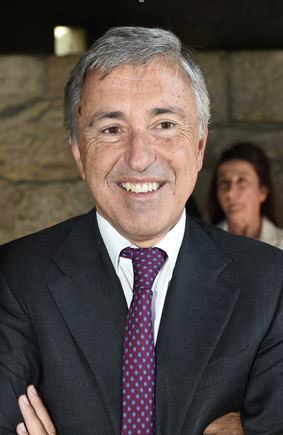
Giovanni Castellucci, CEO Autostrade per l'Italia
⸻
Bad Maintenance or Bad Design?
Prosecutors argued that the collapse was neither sudden nor unforeseeable. Evidence was presented to show engineers had documented deterioration of the bridge's unique reinforced-concrete stay cables for decades. Internal reports warned that critical structural elements—particularly those supporting Pier 9—required extensive strengthening or replacement. Prosecutors alleged that inspections were inadequate, maintenance was repeatedly postponed, and warning signs were minimized despite mounting evidence that the bridge was deteriorating.
The defense, however, presented a very different explanation. Attorneys argued that the Morandi Bridge suffered from an inherent design flaw dating back to its original construction. They maintained Riccardo Morandi's innovative use of concrete-encased suspension cables hid steel strands to inherently hamper subsequent inspections. Corrosion could develop inside the concrete without being visible, they said. Defense lawyers contended that the collapse stemmed primarily from limitations in the bridge's original engineering rather than from criminal negligence by those charged with wrongdoing.
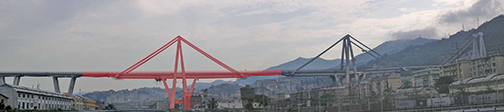
The portion of the Morandi Bridge (red) that collapsed
______
Genoa Justice
While acknowledging that the bridge's design presented unique maintenance challenges, judges concluded that those very challenges made vigilant inspection and timely repairs even more essential. The vulnerabilities were well known, the court found, and the evidence showed that officials and engineers had ample warning that major intervention was necessary.
The verdict marks a significant moment in Italy's ongoing effort to strengthen accountability for public infrastructure. Defendants can appeal the case to the Corte d'Appello di Genova, where complete review of the facts could reverse the verdicts. The replacement structure was opened in 2020—the Genoa–Saint George Bridge.

Riccardo Morandi, pictured at an event, was the designer of the collapsed bridge
_____
Editor's Note:
Italian criminal law differs from American law in that prosecutors in Italy may pursue charges, such as multiple counts of negligent homicide and causing a disaster through negligence, against corporate executives and public officials. In the United States, prosecutors generally must prove a much higher level of personal criminal culpability.
Riccardo Morandi passed away in 1989.
The website for the Autostrade per l’Italia—https://www.autostrade.it/en/home
READ HERE THE NEW EDITION - FIRST 2026 PRIMO
—————————————————————————————————————————————————————————————————————————————
Please visit our DVDs Page to shop our latest collection of DVDs on all things Italian: Films from Italy's Golden Age, Documentaries on Italian American life, ancient Rome, and religion.


Please visit our Books' page to review our latest inventory of books on all things Italian: cookbooks, history, art and culture.


Other articles to read...