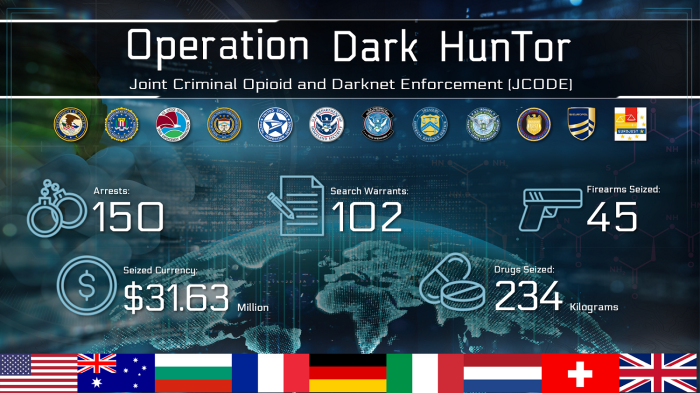
Operation Dark HunTor was a law enforcement investigation of the dark web on a global scale
You can buy anything illegal on the dark web.
From endangered animals to dangerous weapons.
While law abiding citizens browse Amazon, the criminal class has the dark web to shop for the latest in illicit material.
Italy has had enough. The country leads the way in cleaning up the World Wide Web.
In March 2026, Italy participated in a sweeping international operation led by Europol to shut down more than 373,000 darknet websites—all were operated by one person! The suspect is a 35-year-old man in China.
The web network of crime and vice was full of illegal goods and cybercrime services. The operation—code-named “OP Alice”—spanned 23 countries, from Italy to the United States to Ukraine.
Operation Dark HunTor was a law enforcement investigation of the dark web on a global scale
⸻
Global Cops
The OP Alice investigation was spearheaded by German police, headquartered in Bavaria, to expose a vast web of fraudulent darknet platforms. Illegal material for sale could be purchased through Bitcoin payments.
Or so the customers thought.
They were offered child pornography. After payment, they received nothing.
The web sites were nothing more than scams allowing the sole operator to make upwards of $400,000, say police.
There were over 373,000 darknet domains involved in the criminal scheme. Some 10,000 users, worldwide, utilized the dark web sites. The police identified hundreds of suspects throughout Europe, the United States, and elsewhere, who sought child pornography.
Italian authorities joined coordinated enforcement actions to execute search warrants, analyze digital evidence, and identify users within national borders.

General Andrea De Gennaro of Guardia di Finanza
_____
Basta Dark Web
For more than a decade, Italian law enforcement—particularly the Polizia Postale and the Guardia di Finanza—led by General Andrea De Gennaro—has been active in dismantling darknet networks.
One of the most notable cases came in 2019 with the takedown of the so-called “Berlusconi Market,” a major dark web marketplace, named after the former prime minister, Silvio Berlusconi. The site facilitated the sale of drugs and illicit goods. Italian investigators were able to shut down the platform, marking one of Europe’s most significant cybercrime victories at the time.
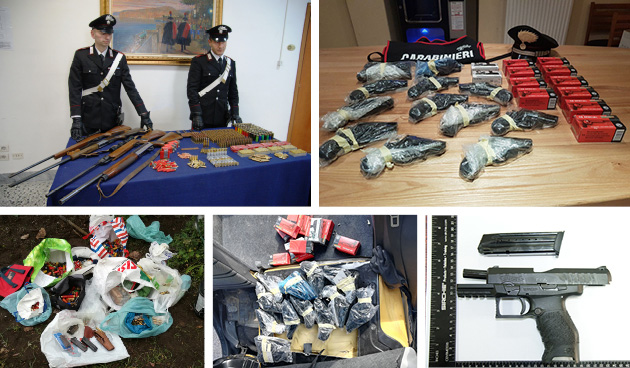
In 2015, Italian authorities carried out Operation Babylon, targeting a darknet marketplace linked to trafficking in illegal weapons. The operation led to arrests, seizures, and the disruption of a network that relied heavily on cryptocurrency transactions—foreshadowing the investigative techniques now used in operations like OP Alice.
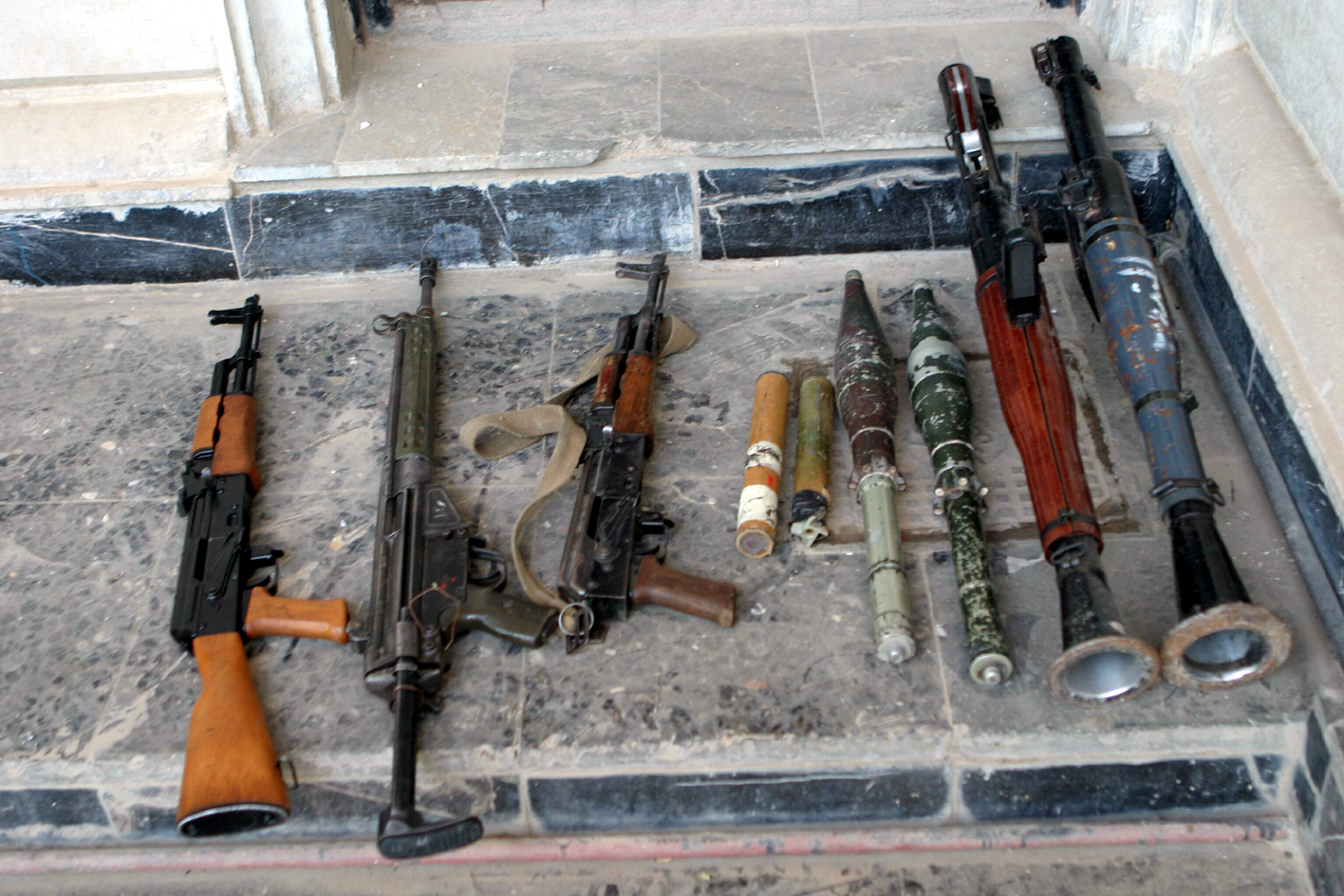
Illegal weapons, some of which were homemade, sold on the dark web in Italy.
⸻
Cybercrime World
Italy’s role has also extended well beyond its borders.
In 2021, Italian authorities participated in Operation Dark HunTOR, a global crackdown coordinated with the United States and Europol. That operation resulted in over 150 arrests worldwide and the seizure of millions in illicit cryptocurrency.
These efforts highlight a consistent pattern: cybercrime, especially on the darknet, cannot be fought by any one country alone. It requires coordination, intelligence sharing, and increasingly sophisticated tools for tracking digital currencies and anonymized networks.
At the center of Italy’s cybercrime response is the Polizia Postale e delle Comunicazioni, a specialized unit dedicated to combating online crime—from fraud and hacking to child exploitation. Working in tandem with financial investigators from the Guardia di Finanza, these units have developed expertise in tracing illegal purchases with cryptocurrency.
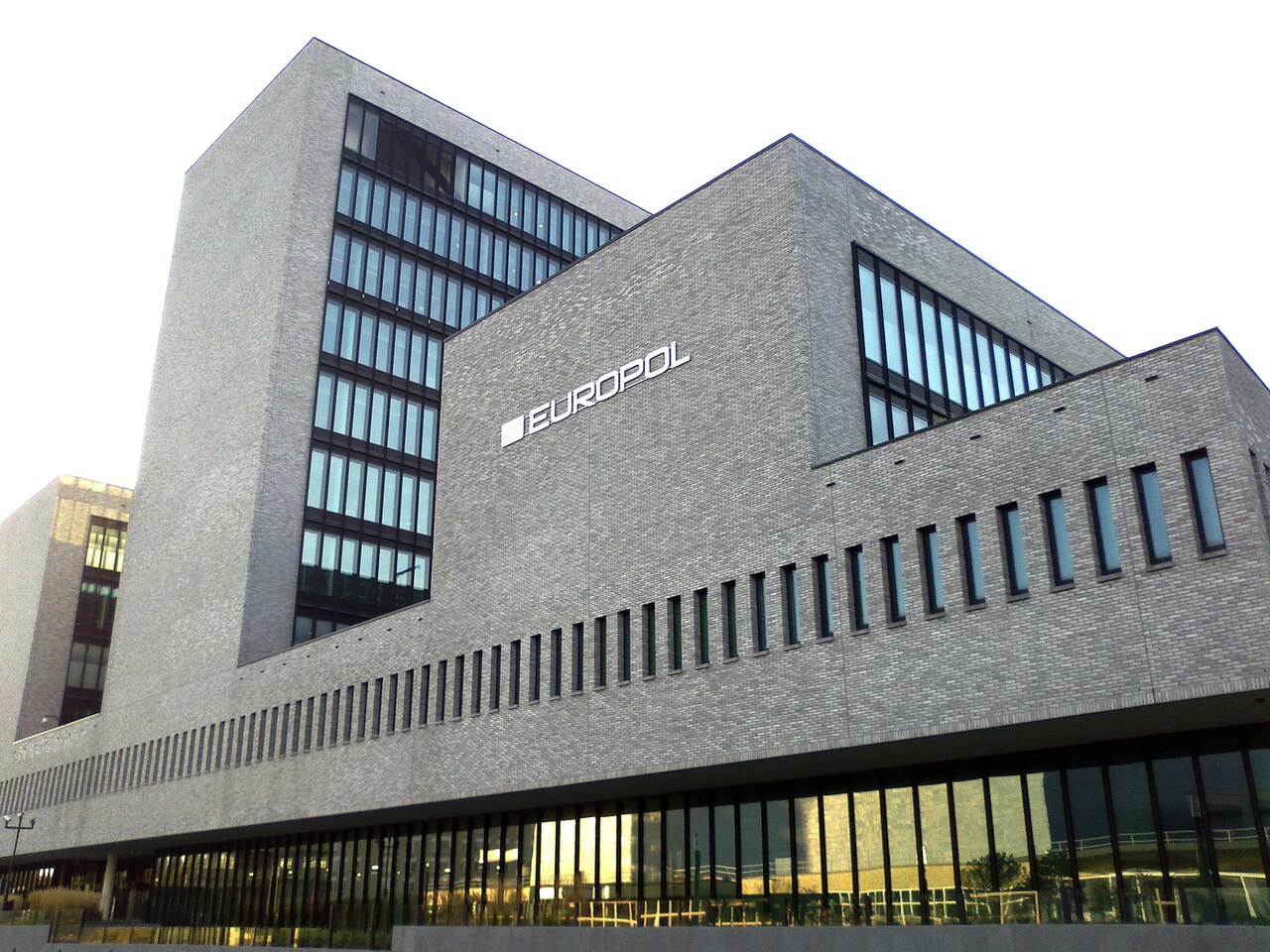
Italy is also deeply integrated into European cybercrime structures, contributing to initiatives such as the European Electronic Crime Task Force and collaborating closely with Europol and INTERPOL.
⸻
Future Evil
The OP Alice operation underscores how dramatically crime has evolved. The traditional image of criminal networks—rooted in physical territories—has given way to decentralized, anonymous systems operating across borders and time zones.
For Italy, a country long associated with historic struggles against organized crime, the battleground has shifted.
The fight now extends into encrypted networks, blockchain transactions, and hidden marketplaces accessible only through specialized browsers. Yet the objective remains the same: to dismantle criminal enterprises and protect the vulnerable.
Editor’s Note:
The web site for Europol is https://www.europol.europa.eu
The “dark web” refers to parts of the internet not indexed by traditional search engines like Google. Access typically requires specialized software such as the Tor browser for users to remain anonymous.
While the dark web has legitimate uses— the platform is often a hub for illicit activity, including:
• Drug trafficking
• Stolen financial data
• Cybercrime services
• Illegal media and exploitation networks
Transactions are often conducted in cryptocurrencies like Bitcoin, making them harder—but not impossible—to trace.
Law enforcement agencies, including those in Italy, have developed sophisticated tools to monitor these networks, track digital transactions, to identify suspects operating behind layers of anonymity.
READ HERE THE NEW EDITION - FIRST 2026 PRIMO

—————————————————————————————————————————————————————————————————————————————
Please visit our DVDs Page to shop our latest collection of DVDs on all things Italian: Films from Italy's Golden Age, Documentaries on Italian American life, ancient Rome, and religion.


Please visit our Books' page to review our latest inventory of books on all things Italian: cookbooks, history, art and culture.


Other articles to read...