The new floating synagogue gets ready for the waters of Venice
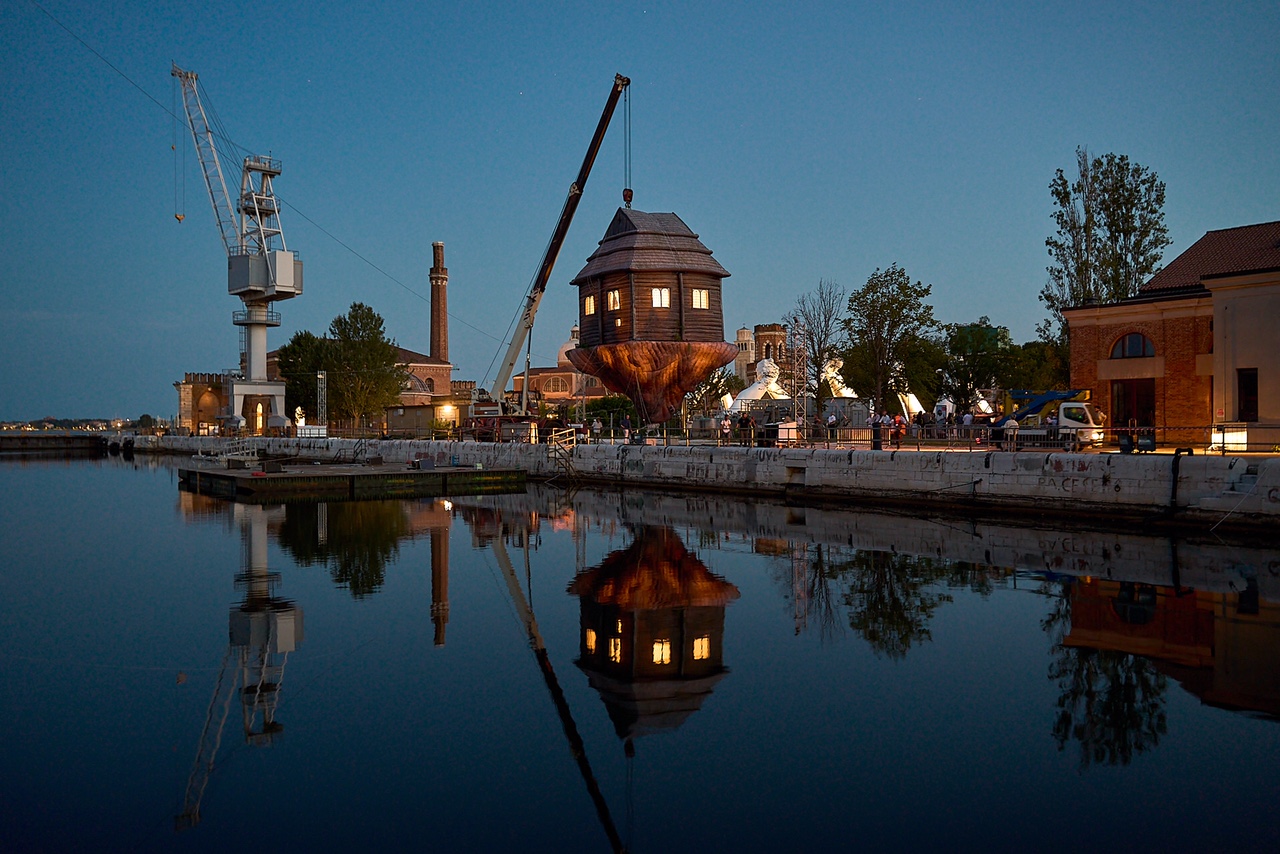
Ready for takeoff.
A new synagogue rises over Venice.
The open-air installation, Nabatele, is a synagogue that floats in the air and on water — created by artist and architect Anna Kamyshan. The structure premiered as an official Collateral Event of the 61st International Art Exhibition – La Biennale di Venezia. The project is curated by Maria Veits and Yevgeniy Fiks and organized by the Montreal Jewish Museum.
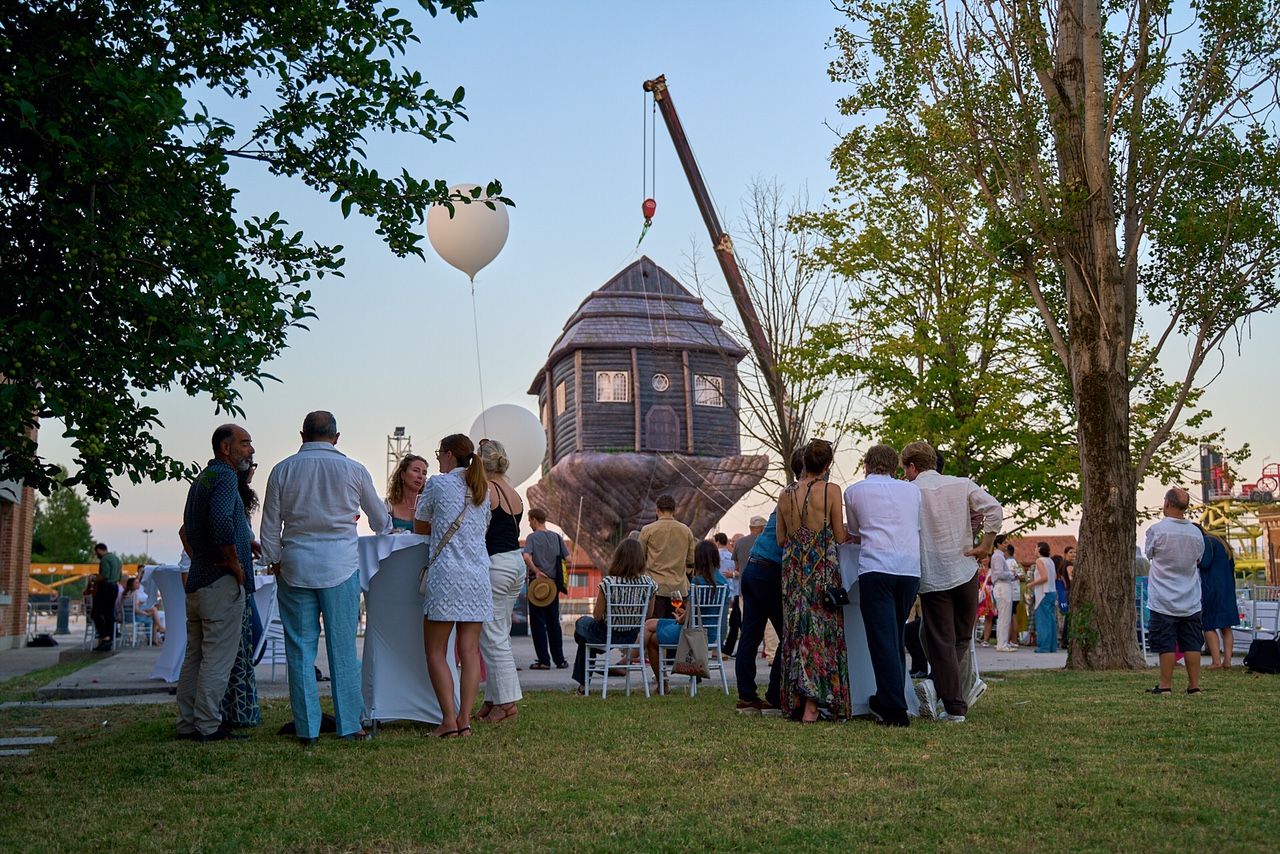
The illuminated synagogue was held by a construction crane to keep from floating away. Throughout Biennale Arte 2026, visitors could witness the glowing structure day and night as it shined over the Arsenale.
The new floating synagogue gets ready for the waters of Venice
⸻
Venice’s Jewish Heritage
The installation draws inspiration from Venice's Jewish history. During the 16th century, the city's synagogues were concealed within the upper floors of buildings. They remained largely hidden from public view. Like those historic houses of worship, Nabatele occupies an elevated space. Unlike them, however, it stands proudly in full view, radiating light across the Venetian skyline.
The work evokes René Magritte's 1959 painting The Castle in the Pyrenees, in which a castle rests atop a giant floating rock suspended over turbulent seas—an image often interpreted as representing fragile hope and uncertain refuge. Kamyshan's installation reflects similar themes of displacement and endurance amid today's global conflicts and divisions.
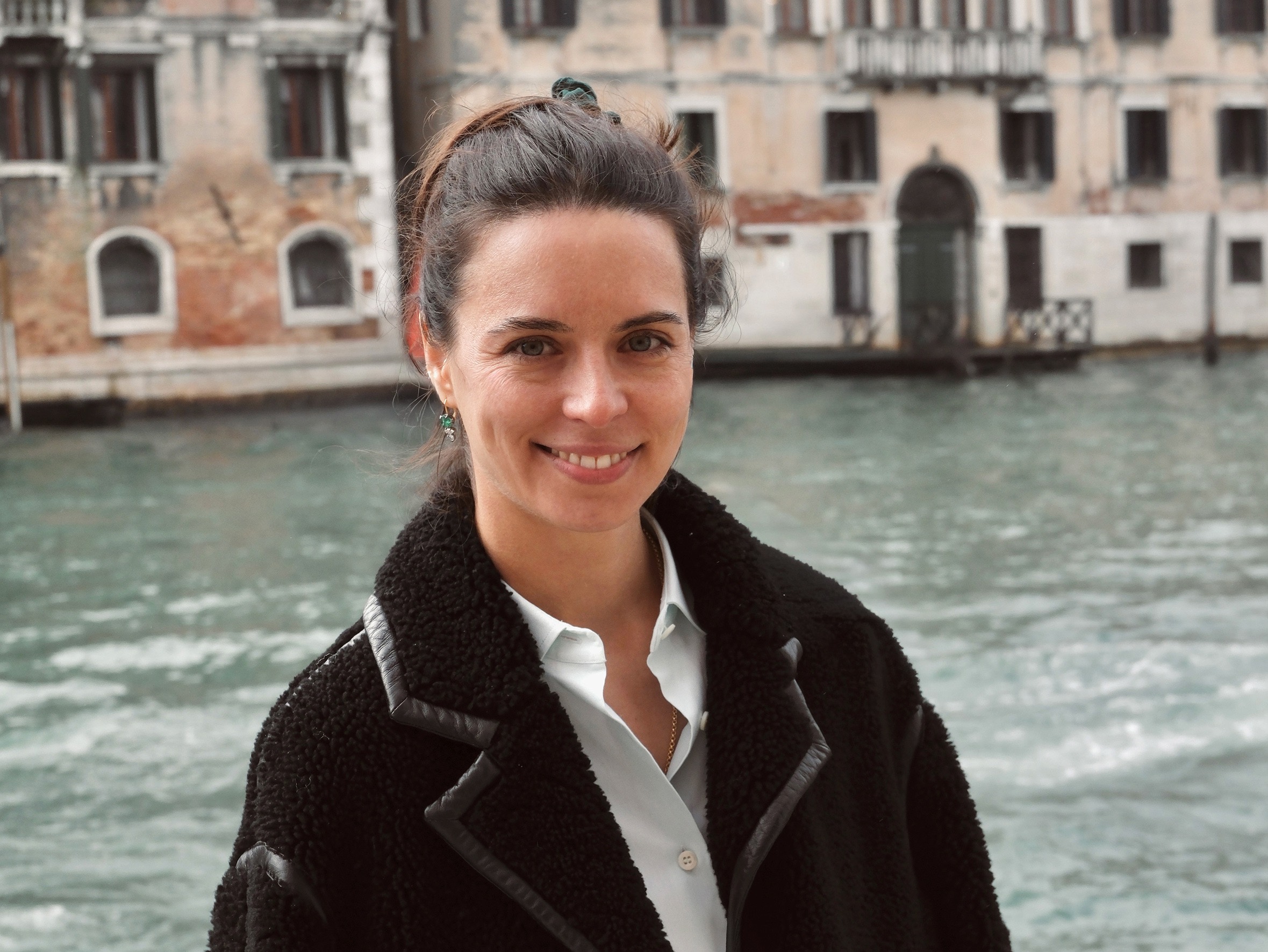
Anna Kamyshan, architect and artist from London, who designed the floating synagogue
______
Named Nabatele
The title Nabatele derives from a Yiddishized word of Slavic and Semitic origin meaning "to call attention" or "to sound an alarm in times of danger." The installation serves as both a warning and a beacon, offering a universal symbol of refuge, perseverance, and shared humanity.
Constructed as a double-membrane to contain a helium-filled balloon, the installation can rise as high as 25 meters (82 feet). The synagogue itself retains the precision and permanence of traditional architecture while floating above the city. Beneath it, the rock incorporates fragments suggestive of roots and homeland, symbolizing both belonging and displacement.
Weather continually transforms the work. On windy days, Nabatele settles gently onto the water's surface; in calmer conditions, it ascends high into the Venetian sky, creating an ever-changing dialogue with the surrounding atmosphere. The installation also reflects Kamyshan's own layered identity as a Ukrainian artist of Jewish and Russian heritage.
"Nabatele explores the tension between gravity and buoyancy, the gentle effort of existing uprooted," Kamyshan said. "Whether the structure ever had roots or a foundation, or instead always floated freely above the ground; whether it seeks a place to land or prefers its airy autonomy—these questions remain a mystery. The constant light from the synagogue windows symbolizes for me that inner flame that is not extinguished by any turbulence, and that persists in instability."
_______
Italy’s Yiddishland
Curators Maria Veits and Yevgeniy Fiks describe the project as an expression of Yiddishland—a cultural homeland preserved through language, memory, and shared tradition rather than geography or political borders.
"Central to the project is the concept of Yiddishland: a non-territorial cultural continuum preserved through language, memory, and transmission rather than land or sovereignty," they said. "Nabatele does not simply represent Yiddishland—it embodies it, materializing its diasporic form of belonging and giving presence to a peoplehood untethered from territory."
Designed as a traveling installation, Nabatele will continue its international journey after Venice, appearing at major cultural institutions and public spaces around the world.
The project is organized by the Montreal Jewish Museum, an institution recognized for innovative exhibitions and public programming exploring Jewish history, culture, and contemporary life in Canada and beyond.
"We understand the project as a point of connection over the long term," said Alyssa Stokvis-Hauer, Artistic Director of the Montreal Jewish Museum. "Conceived to travel, Nabatele seeks to broaden its cultural reach and foster dialogue across communities and cultures. These goals led our museum to organize the project as a Collateral Event of the 61st International Art Exhibition – La Biennale di Venezia and to become its future North American host."
_______
Editor's Note:
Editor's Note: This article was prepared with the assistance of Cecilia Sandroni and Marisa Addomine. sandroni@italienspr.com
The Montreal Jewish Museum - Austin Henderson austin@imjm.ca
Polina Ahababova - polina@kamyshan.com
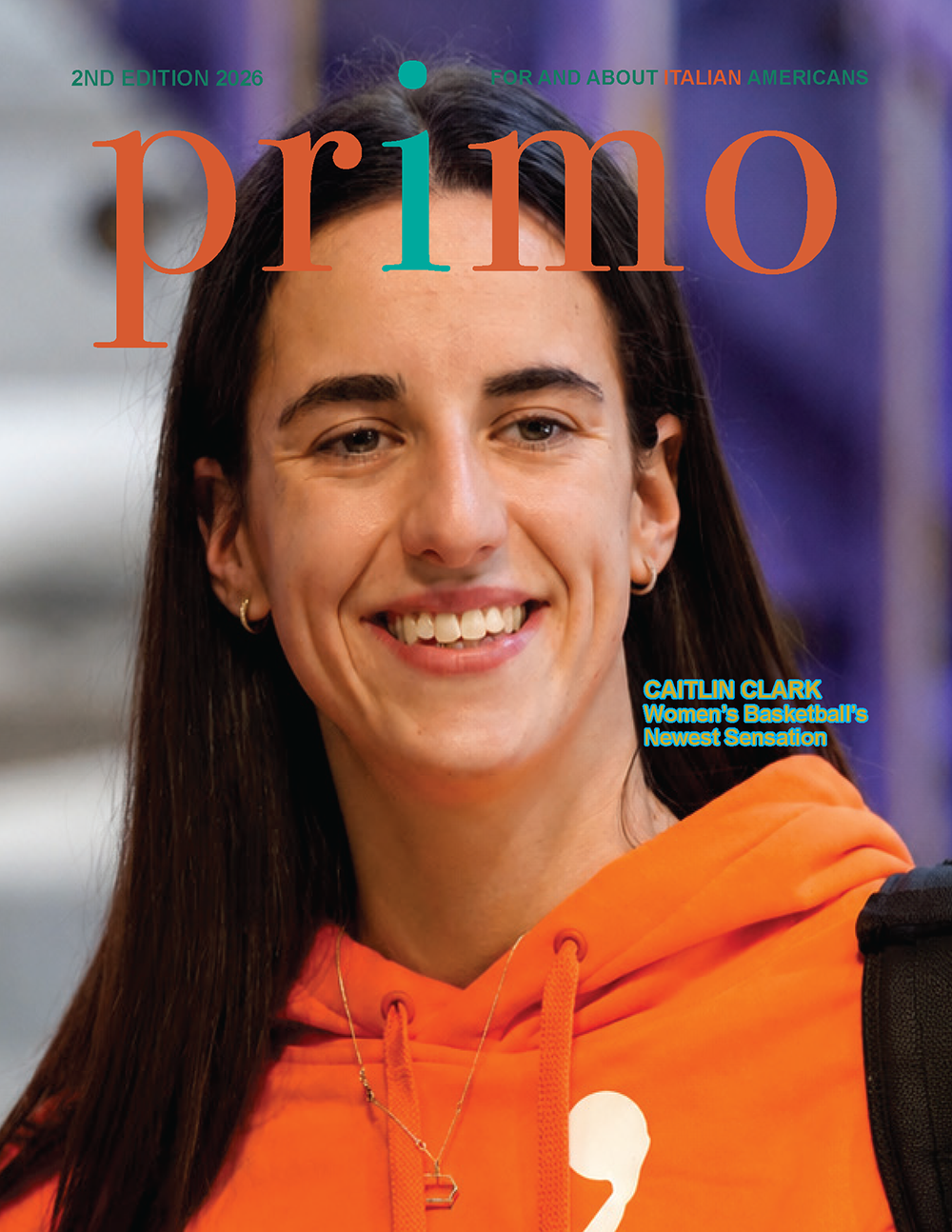
READ HERE THE NEW EDITION - SECOND 2026 PRIMO
—————————————————————————————————————————————————————————————————————————————
Please visit our DVDs Page to shop our latest collection of DVDs on all things Italian: Films from Italy's Golden Age, Documentaries on Italian American life, ancient Rome, and religion.


Please visit our Books' page to review our latest inventory of books on all things Italian: cookbooks, history, art and culture.


Other articles to read...