.jpg)
There you go again.
When in doubt, use Italian criminals—not Irish, not Latino, not Russian, not even Japanese—to explain all things negative and violent—the latest, the foreign policy of a sitting president.
Political theorist, professor at Stanford, Francis Fukuyama, famous for his book, “The End of History,” claims Donald Trump’s rejection of international norms is “Mafia morality.”
⸻
Mafia morality—What might that be?
Fukuyama doesn’t like Trump using the military to oust a Third World thug such as Nicolas Madura of Venezuela. Never mind an endless number of videos on social media showing the people of Venezuela cheering and celebrating the arrest and removal of a communist tyrant, the use of American force is considered by Fukuyama uniquely criminal. He relies on an Italian criminal stereotype to explain behavior that is, in fact, thoroughly American.
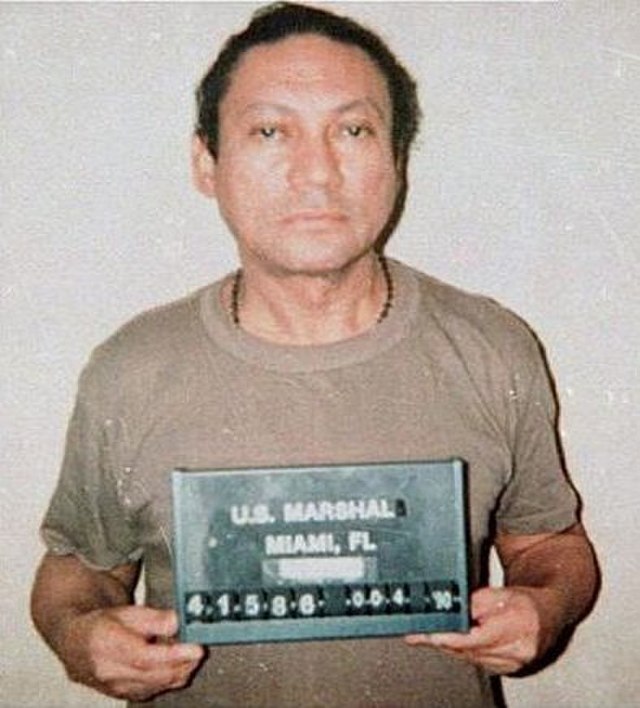
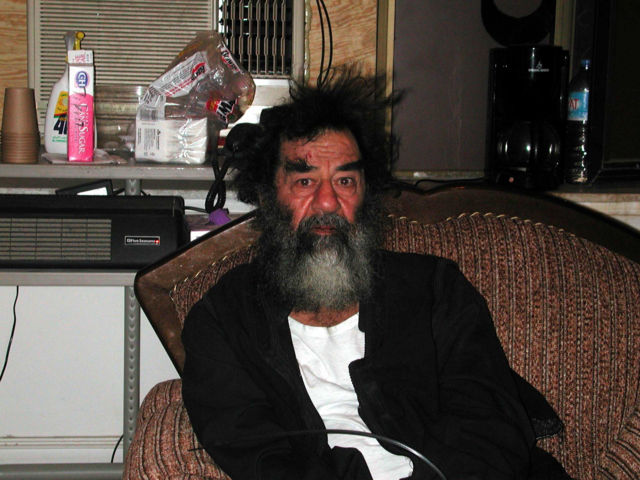
The United States has removed foreign leaders before—openly, forcefully, and without United Nations approval. Under George H. W. Bush, American forces invaded Panama and seized Manuel Noriega. Under George W. Bush, the United States invaded Iraq, toppled Saddam Hussein, and occupied the country for years. Under Barack Obama, U.S. airpower helped remove Muammar Gaddafi, leaving Libya fractured and unstable to this day.
In each case, international norms were strained or ignored. In each case, the justification was moral, strategic, or humanitarian. And in none of these cases was American behavior described as “Mafia-like.”
.jpg)
_____
Why, then, is the Mafia label applied now?
The answer lies less in Trump’s actions than in his rhetoric. Trump dispenses with the language that traditionally masks power—no talk of “liberal order,” “responsibility to protect,” or “values-based leadership.” He speaks plainly about leverage, resources, and advantage. Fukuyama’s real discomfort is not with the exercise of power, but with its undressed articulation.
Bluntness, however, is not criminality.
Political realism—the idea that states act primarily in their own interests—is not a Trump invention. It predates the modern international system. From Thucydides to Machiavelli and onward, observers of power have noted that the strong rarely submit themselves to rules they can enforce only on others. The United States has never been an exception.
To brand this tradition “Mafia morality” is not just analytically weak—it is culturally careless.
⸻
Trump Hate—Italian Hate
The Mafia is not a neutral metaphor. The name is a specifically Italian criminal archetype, one that has shadowed Italian Americans for generations. When American power is aggressive, it is called “imperial.” When it is cynical, it is “realist.” But when moral condemnation is desired, the imagery suddenly becomes Italian, criminal, and foreign.
This is a form of rhetorical outsourcing. America’s coercive instincts are not imported from the criminal class of Southern Italy. They are rooted in Manifest Destiny, frontier violence, and a belief—long predating Trump—that American power is both necessary and exceptional.
The analogy also collapses crucial distinctions. The Mafia exists outside the law, for private enrichment, enforced by loyalty and fear. The American state, however flawed, operates through institutions—courts, elections, legislatures, and public scrutiny. One may condemn its actions as immoral or destructive without resorting to caricature.
If removing dictators constitutes “Mafia morality,” then the charge applies broadly and historically—not selectively, and not ethnically.
.jpg)
If Trump’s worldview is dangerous, it should be criticized as dangerous realism—not dressed up as organized crime. And if American foreign policy has lost its moral compass, that reckoning must include more than one administration.
Italian Americans have spent decades pushing back against lazy associations with criminality. We should not accept them now, especially when they are used to explain American behavior that has nothing to do with us.
America’s power—and its excesses—are America’s own. They do not require an Italian metaphor to be understood.
_____
Editor’s Note: The photo of Francis Fukuyama was taken by Gobierno de Chile (This file is licensed under the Creative Commons Attribution 2.0 Generic license).
The photo of Colonel Gaddafi was taken by Kremlin.ru from CCA 4.0
To read the State Department’s analysis of Maduro: https://www.state.gov/nicolas-maduro-moros/
Francis Fukuyama’s writings can be read here: https://scholar.google.com/citations?user=yysFidEAAAAJ
—————————————————————————————————————————————————————————————————————————————
Please visit our DVDs Page to shop our latest collection of DVDs on all things Italian: Films from Italy's Golden Age, Documentaries on Italian American life, ancient Rome, and religion.
Please visit our Books' page to review our latest inventory of books on all things Italian: cookbooks, history, art and culture.

Other articles to read...