⸻
Growing up as the child of Yankees in the Deep South in the 1950s and early 1960 wasn’t easy.
Living in Atlanta we had to keep secret the fact that three of our great-grandfathers had served in the Union Army in the Civil War. Our father (1907–2002) had had an uncle named Sherman. I don’t know if my two siblings who married Georgians ever told them of the family skeletons. I married an upstate New Yorker of Irish and Russian ancestry. James Louis Cochrane didn’t give a damn about the American Civil War or Gone with the Wind.
At the age of six in Marion, Alabama, I got a Scarlett O’Hara doll from Santa. Since I had seen my mother sewing her green velvet dress, I began distrusting Miz Scarlett. I didn’t tell my three siblings the bitter truth: I had discovered that there was no Santa Claus.
As a teenager, I resented the idea that I was supposed to behave like a southern belle. When we moved from Atlanta to a farm near Athens, Georgia, I was fortunate to have, as a friend, a very smart girl whose mother had a great sense of humor and was a Kentucky descendent of Mary Todd Lincoln. Thus, I learned that there were many different ways of being a southern woman.
⸻
Southern Belle
In 1964, I came to New Orleans to study graduate economics at Tulane.
I never bothered to read Gone with the Wind in those busy years. I did see the film twice in one week when it was re-released in 1964. Although the film had eliminated some of the worst elements of the novel, it didn’t agree with my concept of what it meant to be a multiple dimension woman and not a sex object.
In the 1980s I still resented the Scarlett mystique so much that I, perhaps mistakenly, turned down a marriage proposal from a good man, in part because his name was O’Hara.
After retiring, first in academia and later at the World Bank, I began to study Italian at Berlitz and later at Northern Virginia Community College. In 1999, I returned to New Orleans and found a great Italian tutor from Naples, Letizia Colderio Hardy.
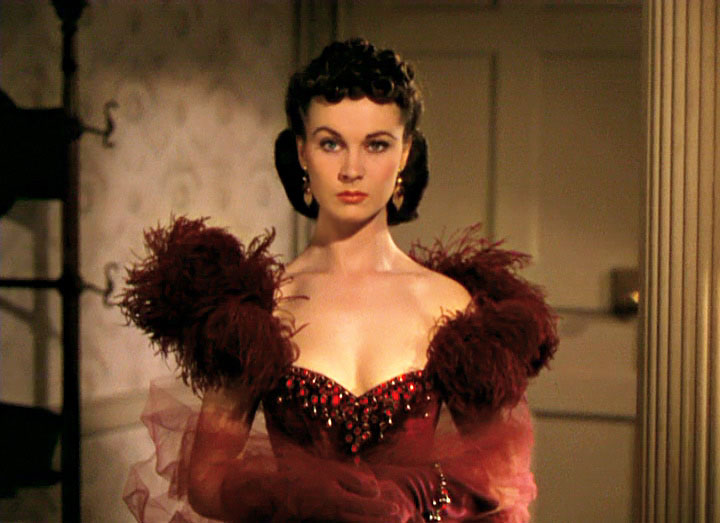
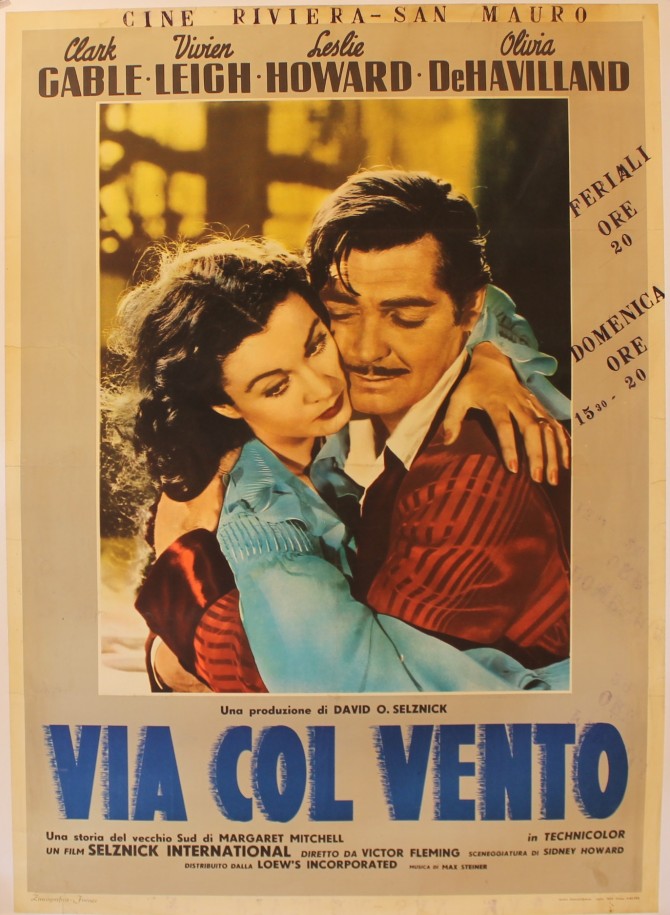
Top, a poster displays the Italian title for "Gone With The Wind," and
actress Vivian Leigh who played Scarlett O'Hara
______
Via col vento
Before Hurricane Katrina I traveled back and forth to Italy trying to find my place in the sun and studying Italian in situ. In 2003, I found a 1940 translation of Gone With The Wind in the monthly antique market in Trieste. Hitler had banned the book, Mussolini had allowed it to be translated and published as Via col vento. He thought that it would show Italians how decadent, racist, and violent Americans were, a particularly Italian twist on propaganda. I don’t know if the book was blacklisted by the Vatican. I recently discovered that, by 1942, Via col vento had sold 100,000 copies in Italy, more than twice the number of any other book translated from English.
I didn’t get around to reading Via col vento until the summer of 2007 when Letizia returned to Italy for the summer. (After Katrina she spent hurricane seasons in Italy.) So, that summer, I was desperate for something to read in Italian that wasn’t too difficult. Most books translated from English into Italian are easier to read than those originally written in Italian. I had found Agatha Christie and Perry Mason novels particularly trackable and enjoyable, and Margaret Mitchell’s style was straightforward and clear, one reason the novel gained such wide readership.
Reading ten or twelve pages in Italian at a time and then checking them against the English original was very instructive. Reading the material in another language also provided psychological “distance”, so that I didn’t take the sexism and anti-Yankee culture as personally as I would have reading it in English
Nevertheless I didn’t make it beyond page 750.
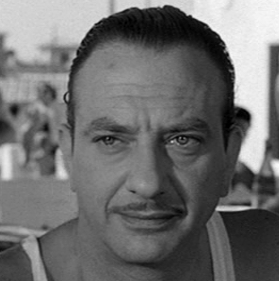
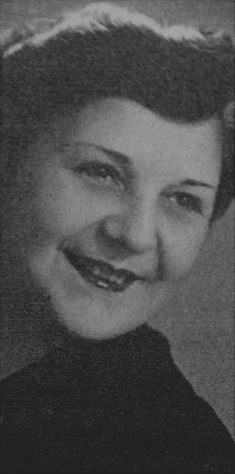
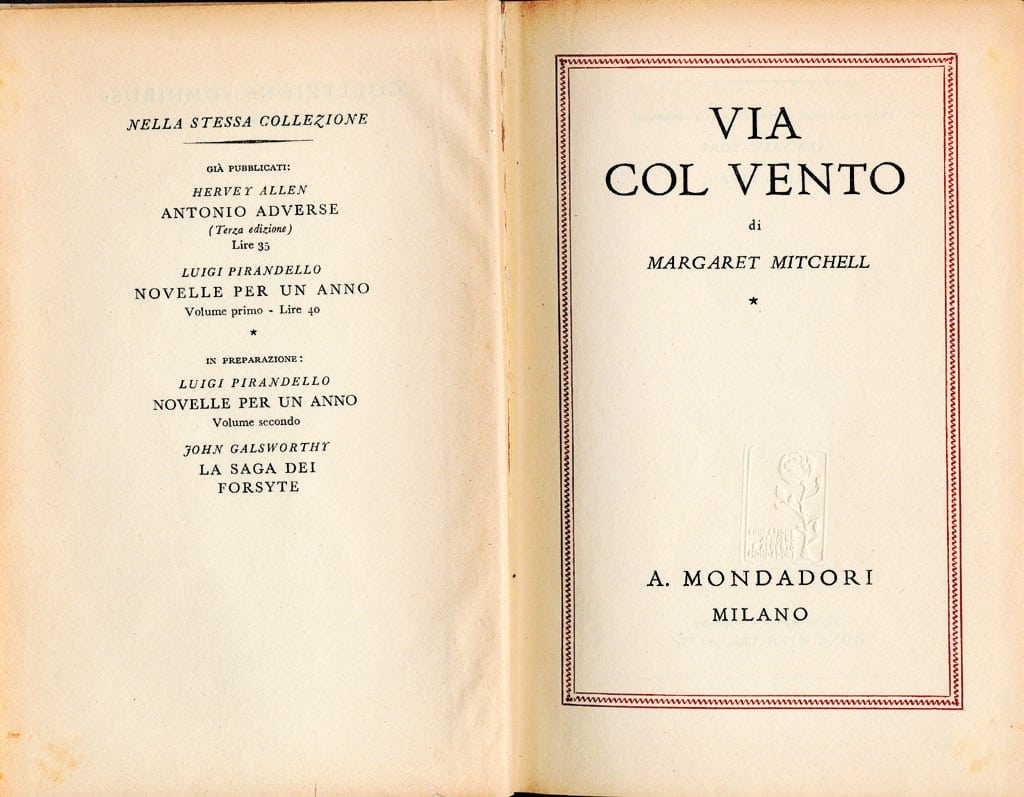
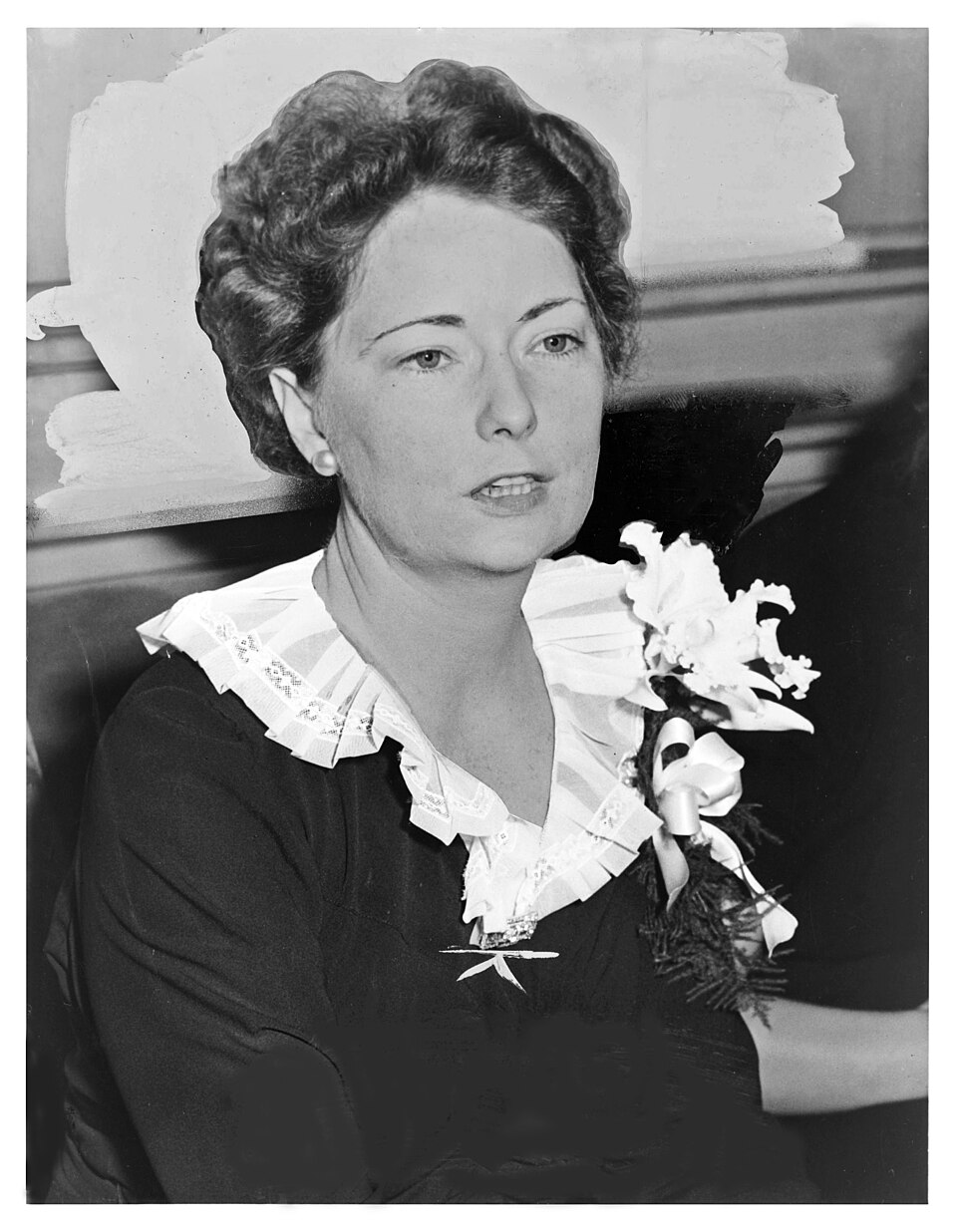
Top, Emilio Cigoli and Lydia Simoneschi dubbed for
Clark Gable and Vivian Leigh for "Gone With The Wind,"
the book as publised in Italy, and the author Margaret Mitchell
_____
A Novel for Italy
The novel not only provided diversion and Italian instruction, it stimulated me to read more about the 1860s American Civil War and the contemporaneous war of unification in Italy. The politics of the American Civil War were black and white compared to the byzantine mosaic of alliances in the Risorgimento that would have made Machiavelli’s head spin. Even Garibaldi, whose 1000 red shirts had liberated Sicily, had found his head spinning when his ‘king’ gave his birth place, Nice, to the French to gain their support in ousting the Austrians from other parts of Italy. That history is too complex for a student of economics, demography, and statistics.
Reading Via col vento led me to Italian novels of the Risorgimento such as Giuseppe Tomasi di Lampedusa’s Il gattopardo, published in 1956 and Federico De Roberto’s I Viceré, published in 1894. Luchino Visconti’s film of The Leopard in particular pointed out similarities with the film Via col vento. For example: what does the actress who played the black-haired beauty in the Visconti film have to do with Via col vento? And what does the British actress who played Scarlet in the American film have to do with Gone With The Wind?
I wrote a thirty page comparison of the two books that I titled, Scarlett O’Hara meets Prince Fabrizio. Even though it was never published in my English or Italian versions, it caused so much controversy in some unknown group. It got me into more serious trouble than I ever did when negotiating with the Egyptians, the Israelis, or the Chinese on our World Bank research projects. When I published a small article on De Roberto in 2021, I got even worse abuse. I began to think that the Civil War was still going on, but that the battle lines had shifted in some mysterious fashion; or maybe I had offended some unknown prince. So for now I’ll leave the comparison between Italian and American literature to others.
Buona lettura!
The race is not to the swift, nor the battle to the strong, neither yet bread to the wise, nor riches to men of understanding, nor yet favour to men of skill; but time and chance happeneth to them all. Ecclesiastes ix,11.
Editor’s Note: The writer, a retired economist, is based in New Orleans.
READ HERE THE NEW EDITION - FIRST 2026 PRIMO
—————————————————————————————————————————————————————————————————————————————
Please visit our DVDs Page to shop our latest collection of DVDs on all things Italian: Films from Italy's Golden Age, Documentaries on Italian American life, ancient Rome, and religion.

Please visit our Books' page to review our latest inventory of books on all things Italian: cookbooks, history, art and culture.
Other articles to read...