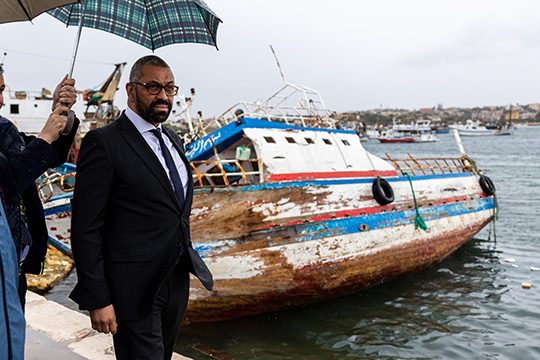
British Home Secretary, James Cleverly, made a 2024 visit to Lampedusa, a point of entry of illegal migrants.
What were once shipping routes for narcotics now ships people.
The new contraband: Migrants.
In a decisive move, Europol—an organization of police departments in Europe—has launched the European Centre Against Migrant Smuggling (ECAMS)—a specialized unit designed to dismantle the crime groups who profit from illegal migration.
The announcement, made on March 24, signals a turning point in human trafficking by focusing on organized crime instead of geopolitics.
British Home Secretary, James Cleverly, made a 2024 visit to Lampedusa, a point of entry of illegal migrants.
⸻
Benvenuti in Sicilia
For years, migrant smuggling has often been framed as a byproduct of geopolitical instability. Europol’s latest initiative reframes it more bluntly: this is a multi-billion-euro criminal enterprise.
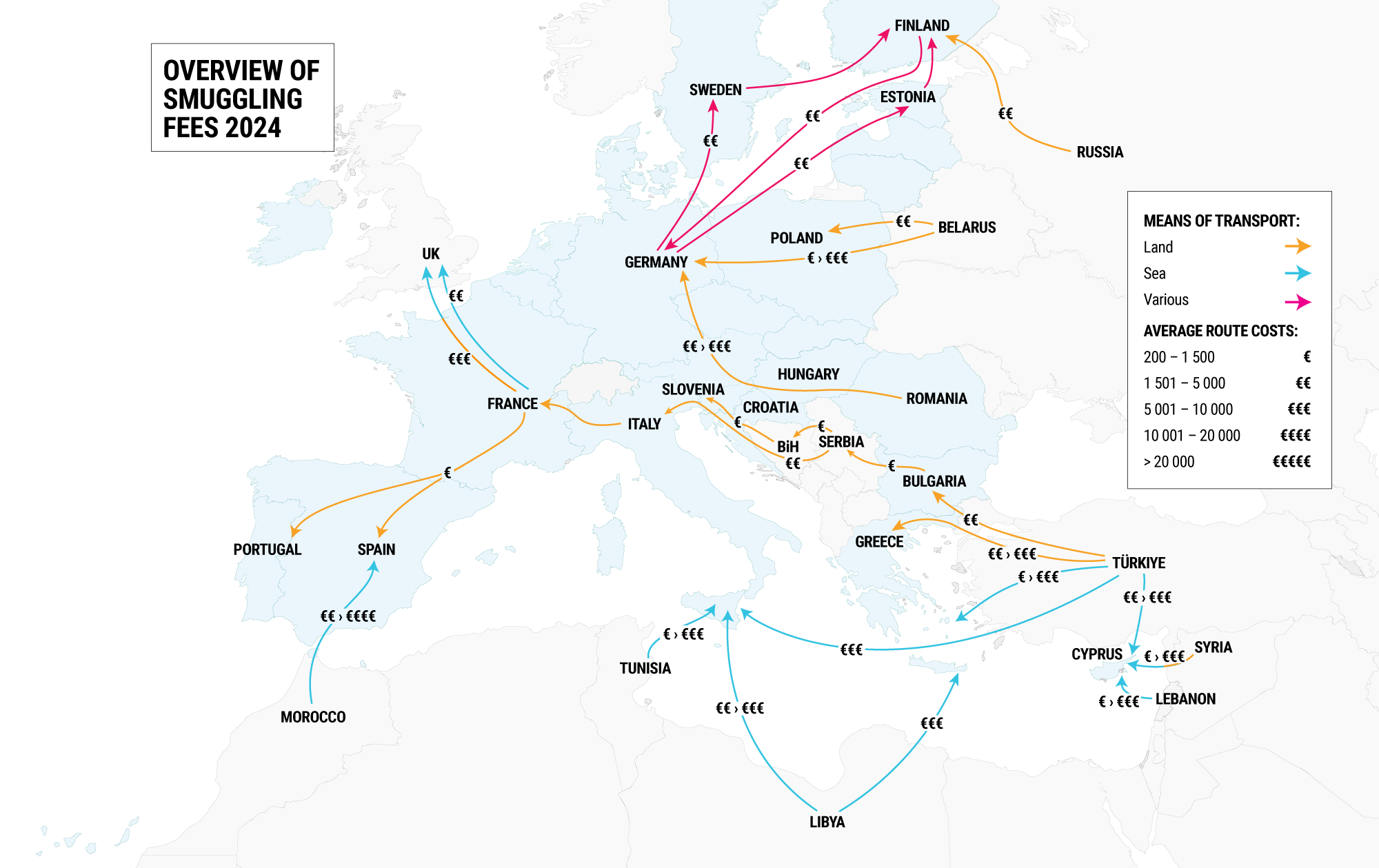
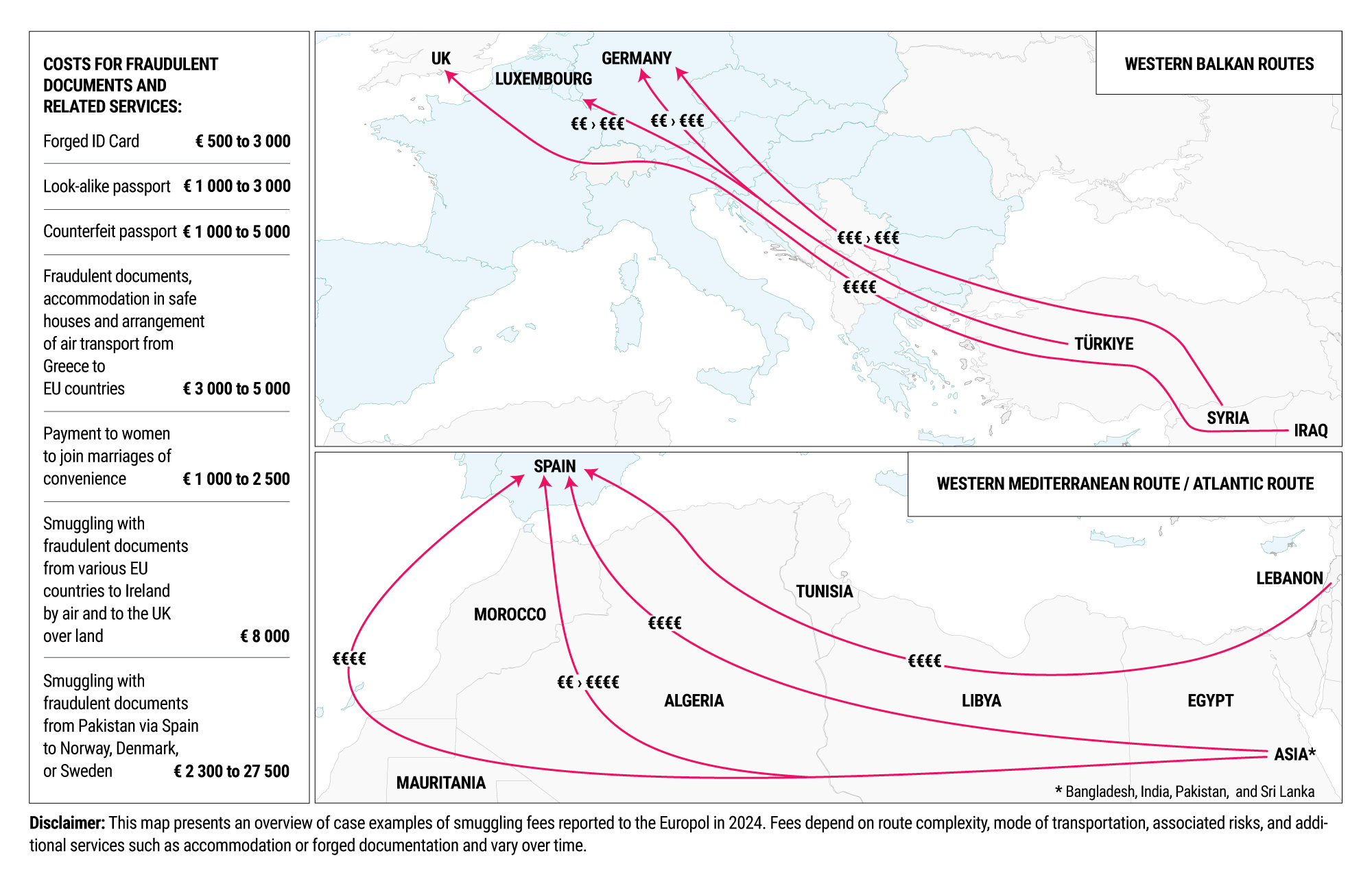
Smuggling networks operate across continents, charging migrants staggering sums—sometimes up to €20,000 ($23,000) per person—for journeys that are frequently life-threatening. Routes from Iran into Western Europe, for example, can cost migrants €15,000 ($17,300), while Balkan corridors into Germany command similar prices.
Italy remains a top drawer for migrants because of its location in the center of the Mediterranean. The country also tends to charge the highest fees for illegal entry. A map provided by Europol shows upwards of €20,000 per migrant to enter illegally through southern Sicily.
Tunisia and Libya remain top sources for smuggling people into Italy. The countries gather many from central Africa to move across the Mediterranean Sea. Law enforcement believes officials in these countries are partners with organized crime lords to smuggle people into Italy.
“These networks are increasingly complex,” Europol Executive Director Catherine De Bolle noted. “They operate both online and offline, using layered financial systems—including underground banking—to move profits and evade detection.”
Italy’s North has become a gateway for illegal migrants almost equal to Sicily. People from war torn regions in the Middle East, especially Syria and Gaza, pay lofty fees to organized crime to move them from Turkey through the Balkans into Trieste and other cities and provinces in Northeast Italy.
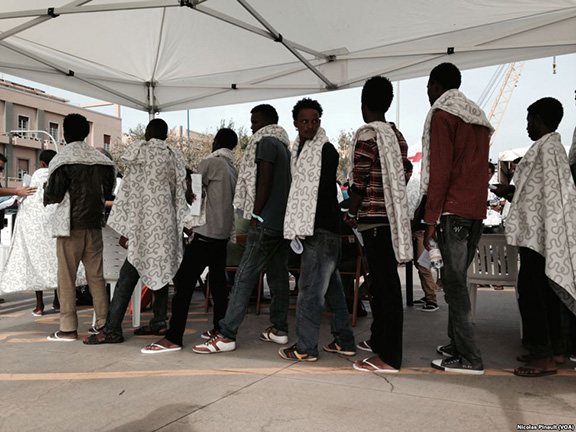
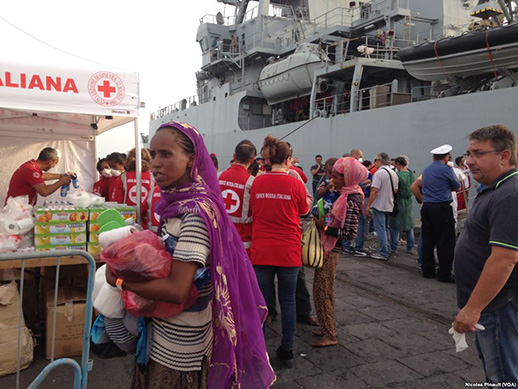
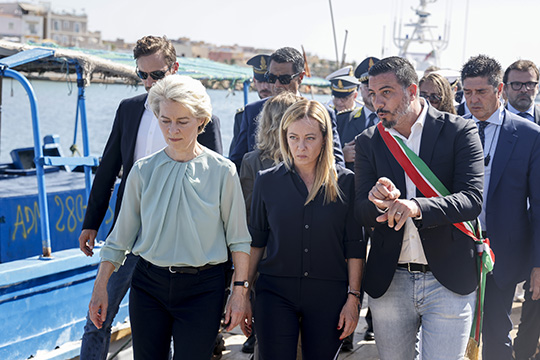
Migrants attempting to illegally enter Italy are captured and detained by Italian authorities in Catania, where Prime Minister Giorgia Meloni European Commission President, Ursula von der Leyen recently visited.
From Boats to Broadband
Gone are the days when smugglers relied solely on word-of-mouth and physical intermediaries. Today, they advertise on social media, recruit operatives online, and coordinate logistics through encrypted communications.
Europol is leaning heavily into open-source intelligence (OSINT) and digital surveillance. Through initiatives like DigiNeX—a network of digital investigators—law enforcement agencies now monitor the dark web and other online systems where smuggling networks recruit and operate.
In a recent coordinated effort, more than 30 experts targeted Mediterranean smuggling routes, generating over 1,000 investigative leads tied to high-value targets.
⸻
Follow the Money
Europol is targeting the economic backbone of smuggling networks—tracking, freezing, and confiscating illicit profits. The logic is clear: dismantle the financial incentives, and the system begins to collapse.
This approach recognizes migrant smuggling not as a crime of movement, but, rather, a crime of capital.
Since migration routes never respect borders, international cooperation is a must to stop smugglers.
Through joint investigation teams and cross-border intelligence sharing, authorities aim to track networks across entire routes—from origin countries to final destinations.
This “whole-of-route” approach reflects a sobering reality: migrant smuggling is not a European problem alone, but a transnational system of exploitation.
______
The Human Cost
Criminal networks routinely mislead migrants about the risks, exposing them to violence, exploitation, and often death. The promise of a better life is weaponized—turned into a commodity sold at a premium.
Rather than chasing individual smugglers, authorities are now targeting entire systems—their finances, their digital infrastructure, and their global networks.
Whether this approach will significantly curb illegal migration remains to be seen. Yet, one thing is clear: Europe is no longer treating migrant smuggling as a peripheral issue.
Human smuggling has become a highly organized, highly profitable criminal industry operating in plain sight.
Editor’s Note: To learn more about Europol, please log on to their web site at: https://www.europol.europa.eu
READ HERE THE NEW EDITION - FIRST 2026 PRIMO

—————————————————————————————————————————————————————————————————————————————
Please visit our DVDs Page to shop our latest collection of DVDs on all things Italian: Films from Italy's Golden Age, Documentaries on Italian American life, ancient Rome, and religion.


Please visit our Books' page to review our latest inventory of books on all things Italian: cookbooks, history, art and culture.


Other articles to read...