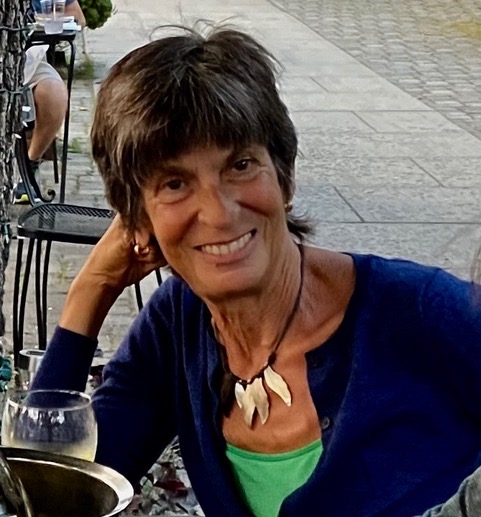
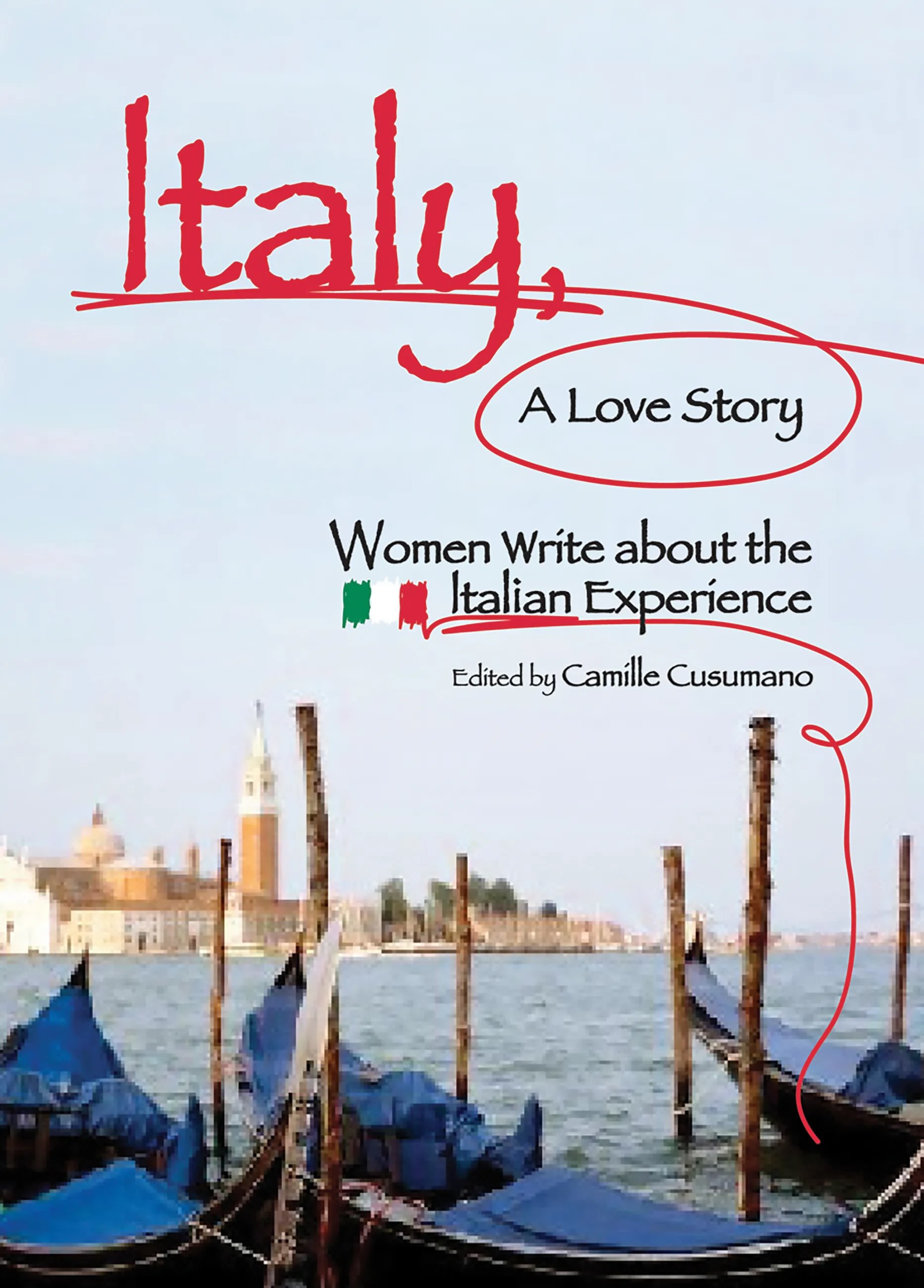
Italy has inspired countless travel books, but Italy, A Love Story seeks something more intimate. Edited by Camille Cusumano, this collection of essays by 28 women explores a country that is not simply visited but experienced—through family, food, romance, ancestry, art, desire, disappointment and self-discovery.
Cusumano is especially well suited to assemble such a collection. Her own love affair with Italy began not in Rome, Venice or Florence, but in Peterstown, the Little Italy neighborhood of Elizabeth, New Jersey. The fifth of ten children, she grew up surrounded by the traditions of her four Sicilian grandparents. There were the expected staples of an Italian American household—macaroni, meatballs, tomatoes and pizza—but also customs that set the family apart. St. Joseph's Day and the feast of Santa Lucia were observed, as was sometimes Pasquetta, the Monday after Easter. Her grandmother even practiced Old World remedies with olive oil and the laying on of hands.
Thus, when Cusumano writes about Italy, she approaches the country with the unusual perspective of someone encountering a place that is simultaneously foreign and familiar.
She knows well the Italy of the travel brochures. She has walked the Via dell'Amore in Cinque Terre, absorbed the art of Florence, bicycled through Umbria and encountered what she calls “my people” in a Sicilian mountain village. Yet Italy, A Love Story deliberately ventures beyond picturesque landscapes and culinary pleasures. Cusumano wants her contributors to penetrate the stereotypes and reveal something more complicated about the country and themselves.
The range is suggested by the wonderfully evocative titles. There is Elizabeth Asdorian's “Falling in Love in Milan,” Deana David's “The Trouble with Tiramisu,” Serena Richardson's “An Italian Thanksgiving,” Natalie Galli's “Black and Pink in Cefalù,” Barbara Grizzuti Harrison's “Rome, the Art of Living” and Julianne DiNenna's “Back to Nonna's Boot.”
One essay seems particularly important to Cusumano's conception of the book. While reading Rachel Dacus's “Venice and the Passion to Nurture,” about a woman confronting the possibility of infertility in Venice, Cusumano watched her own mother prepare enough pizza to feed four generations of their family. In that juxtaposition, the anthology's purpose came into focus. Italy becomes more than geography. It becomes a setting in which questions of motherhood, family, identity and belonging acquire new meaning.
That is ultimately the attraction of Italy, A Love Story. There is no single Italy here. For one woman it is ancestral home; for another, escape. It can be romantic, sensual, frustrating, nourishing or transformative.
Cusumano brings these different voices together around one irresistible proposition: Sometimes we travel to discover a country. And sometimes, through that country, we discover ourselves.
⸻
Where to buy the novel?
You can purchase Italy—A Love Story and browse other books for sale by visiting Camille Cusumano’s web site: https://www.camillecusumano.com/books
⸻
Primo Interview
CAMILLE CUSUMANO
Author of Italy—A Love Story
In this exclusive interview with PRIMO, Camille Cusumano discusses the inspiration behind Italy—A Love Story, the experience of bringing together its contributors, and the enduring romance between Italy and those who love it.
You grew up in Peterstown, the Little Italy neighborhood of Elizabeth, New Jersey, surrounded by the traditions of your four Sicilian grandparents. How did that upbringing shape your understanding of Italy, and how did your impressions change when you eventually experienced the country firsthand?
I just took it for granted that the world was mostly Italian (the lucky ones, Sicilian, according to my boastful father). Didn’t all grandparents speak broken English? I loved hearing all our many Sicilian relatives speak a tongue I only partially understood. We ate a healthy Mediterranean diet I still love. I dreamed of visiting Italy but had to wait until I could pay me way. Looking back, I see I was unconsciously aware of my two cultures—American and Italian. I was in my mid-twenties when I started to feel more overtly proud of my heritage and not take it for granted. In 1983, I published my first story about having found my relatives in Sicily in 1976. I don’t think my impressions changed too much after my first visit to Italy in 1972. I still considered the culture expressive, warm, creative, uniquely dramatic in its own way. I did get a more expanded view of the different regions of Italy. I found Sicily to be the polyglot culture my father had always said it was.
Italy, A Love Story brings together essays by 28 women, each offering a different perspective on Italy. What inspired you to assemble this anthology, and what qualities were you looking for in the stories you selected?
I had assembled an anthology on France that did well and I knew Americans loved Italy even more. So Seal Press who publishes work by and about women, gave me the go ahead. I once truly believed the world had two kinds of people—Italians and those who wished they were. I was aware of America’s love of all things Italian from food to clothing to art and film and even the archetypal Italian persona. It was not hard to find numerous women with exciting stories to tell about their visits all over Italy. They were so intriguing and full of perceptive observations, especially if they were not from Italian heritage, it was hard to limit the number of essays.
Many Americans associate Italy with romance, beautiful landscapes, extraordinary food and great art. Yet your anthology explores more complicated experiences, including disappointment, infertility, questions of identity and personal transformation. Was challenging the romanticized image of Italy one of your goals?
No, not really. My overarching goal was to assemble good writers. Getting beyond the cultural stereotypes was important also. I was pleasantly surprised at the diversity of experiences that the women wrote about and the imaginative twists on the usual romance of Italy. For example, the writer who is initially starry-eyed for a young man, but ends up having a more authentic and greater love for his Nonna.
You have written about reading Rachel Dacus's essay, “Venice and the Passion to Nurture,” while watching your mother prepare pizza for four generations of your family. Why was that particular moment so meaningful to you, and what did it reveal about the connections between Italy, family and womanhood?
Rachel’s story intrigued me because as the fifth of ten, I often watched my mother pregnant as I grew up. Child birthing was simply an uncomplicated fact of life, of course a celebrated one. As I read Rachel’s essay, watching my mother’s hands roll the dough, one of my nieces was present, also desperately hoping to get pregnant. Defying my heritage and family’s prescribed role for women, I was at the other end of that spectrum—not particularly wanting children, concerned only about my creative (or literary) “fertility.” I have always been grateful to have, last count, fifty-plus nieces and nephews, thanks to eight of my nine siblings. I think the pressure to bear children would have been greater for me, if I were born in Sicily. Which opens a subject, too involved to go into here—that is, the difference between being Italian born and being Italian-American born.
Your own travels have taken you from the villages of Sicily to the cities of northern Italy, including Florence and the countryside of Umbria. Of all your experiences in Italy, which place or encounter has affected you most deeply, and why?
Sicily, hands down. From my first whimsical visit to my father’s cousins in 1976 to all the later trips with siblings and a boyfriend. In 2006, we organized a reunion in Cefalu with both sides of the Atlantic. It was wonderful bonding—I have written about that trip. I love how my Sicilian relatives are so tight-knit and full of joie de vivre, yet have worked very hard, the older generation as a farmer, the newer ones as college educated professors, lawyers, and businesspeople. They live near each other and share life’s loves and losses. Of course, I love all of Italy in a different way. Years ago, I had a most unforgettable bicycle trip through the hilltop villages of Umbria. I can still taste the fettuccine with local truffles and see the pink-glow of the plains around Assisi.
For many Italian Americans, Italy represents both an ancestral homeland and a country they may know primarily through family stories and inherited traditions. What do you hope Italian American readers, particularly women, will discover about their heritage and themselves through Italy, A Love Story?
Each essay is larger than the usual formulaic travel story. Each essay has a unique individual Italian-relevant theme and also reflects a universality that readers can relate to even if they are armchair travelers. Some essays are entertaining, full of comic relief—the blond who is followed endlessly by Italian men. Or like Sexing the Eggplant, a light-hearted reflection on that vegetable. Some address interesting historical facts, like Susan Tiberghien’s Emilia’s Petition. What I think is that readers will discover that they need to go to Italy soon!—if they haven’t already.
Editor’s Note: You can purchase Italy—A Love Story and browse other books for sale by visiting Camille Cusumano’s web site: https://www.camillecusumano.com/books
___________________________________________________________________________________________________________________________________________________
____________________________________________________________________________________________________________________________________________________
Please visit our Books' page to review our latest inventory of books on all things Italian: cookbooks, history, art and culture.