.jpg)
.jpg)
Italians like it the way it is.
That’s what Prime Minister Giorgia Meloni and her political allies learned after their effort to reform Italy’s bloated justice system went down in defeat.
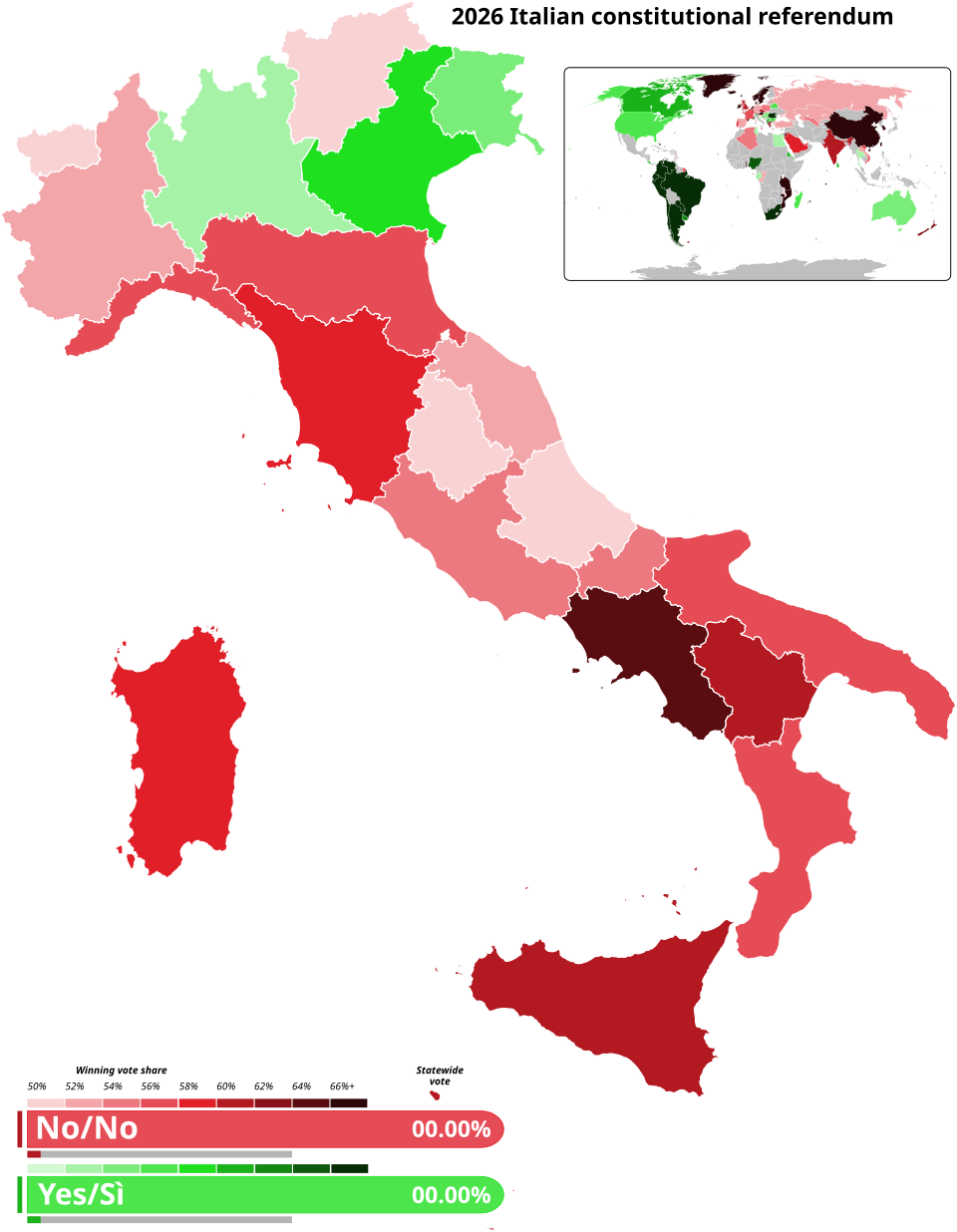
Italians went to the polls on March 22 and 23 on the referendum to reform Italy’s judiciary and legal proceedings. What they decided was to leave the justice system unchanged. Let remain the very problems that made reform necessary.
The recent referendum was not held in a vacuum. Legislation was passed in both chambers of parliament to reform the system. However, the majority needed was not large enough. A referendum had to be called. The people had to decide.
They did with 54 percent against reform!
.svg.png)
Prime Minister Giorgia Meloni and Justice Minister Carlo Nordio led the effort to reform Italy's justice system
A copy of the referendum ballot with translation in English, below...
Do you approve the text of the law revising Articles 87, paragraph 10, 102, paragraph 1, 104, 105, 106, paragraph 3, 107, paragraph 1, and 110 of the Constitution, approved by Parliament and published in the Official Gazette no. 253 of 30 October 2025 under the title "Provisions Governing the Judicial System and the Establishment of the Disciplinary Court"?
⸻
No Justice, No Closure
For years, Italians expressed frustration with a judiciary widely regarded as slow, complex, and at times unjust in its outcomes.
Justice delayed has too often meant justice denied.
In Italy, criminal cases stretch across years, even decades, moving through multiple levels of appeal. In some instances, defendants have walked free not because they were acquitted, but because the statute of limitations expired before a final verdict could be reached.
Some ases to underscore the weakness of Italy’s justice system are:
The Eternit Environmental Disaster
Thousands were exposed to asbestos by the Eternit company. In 2012, executives were convicted for causing a public health catastrophe. Yet, in 2014, Italy’s high court overturned the convictions due to statute of limitations.
No final accountability in one of Italy’s worst industrial tragedies.
The Andreotti Mafia Trial
Former Prime Minister Giulio Andreotti was tried for alleged Mafia ties. The court ruled there were credible links before 1980. However, those charges expired under the statute of limitations because of a myriad of legal delays.
A historic case ended without a definitive conviction—fueling public confusion and mistrust.
The ThyssenKrupp Factory Fire
In 2007, an industrial fire in Turin killed seven workers. Initial convictions were handed down—but the case went through years of appeals. Final sentences were reduced and delayed after prolonged legal battles.
Justice minimally delivered, but only after years of uncertainty for victims’ families.
Mafia Cases and Endless Appeals
Organized crime trials often involve multiple defendants and complex financial evidence. Defense teams frequently use procedural appeals to stretch timelines.
Some cases collapse or weaken over time—turning delay into a legal strategy.
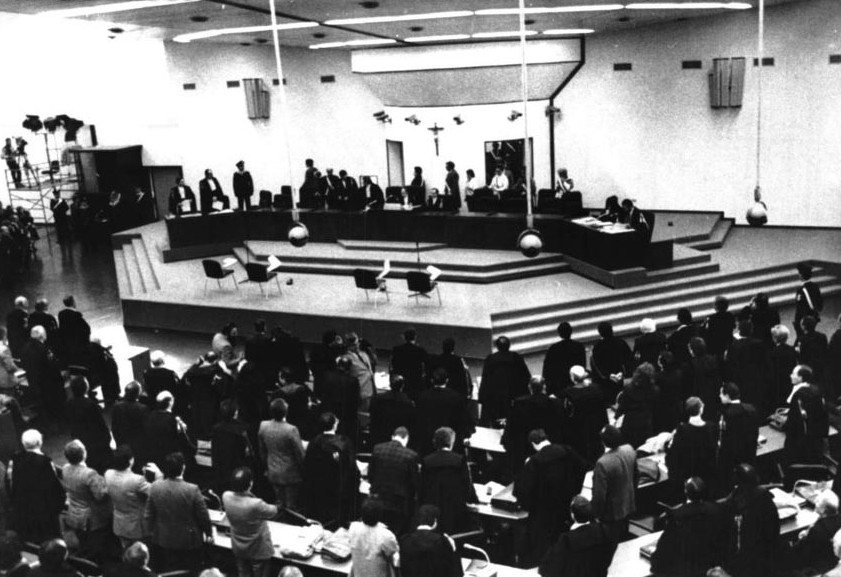

The Maxi trial and a picture of former prime minister, Giulio Andreotti
A Vote Against Reform, A Vote for Crime
One of the most widely cited examples is the collapse of major corruption and financial crime cases due to procedural timelines. Complex investigations—often involving layers of shell companies, international transactions, and coordinated criminal networks—require time to prosecute. Yet the system’s own clock can run out before that work is complete.
Hence, the more complex and serious the crime, the greater the chance it may never be fully adjudicated.
Cosa Nostra and ’Ndrangheta have long demonstrated an ability to navigate—and exploit—the intricacies of the legal system. With access to skilled legal defense and a deep understanding of procedural law, they have, in some cases, turned delay into strategy.
Outside organized crime, the system has produced troubling outcomes.
Civil cases—ranging from business disputes to family law—can take so long that they effectively lose their meaning. A commercial case resolved after ten years may come too late to save a company. A family case delayed for years can reshape lives in ways no ruling can undo. Justice, in these instances, arrives not as a remedy, but as a formality.
None of this is to deny the strengths of Italy’s judicial tradition. The same system produced figures such as Giovanni Falcone and Paolo Borsellino, whose work dealt historic blows to the Mafia. Their legacy stands as proof of what an independent judiciary can achieve.
But their legacy also underscores a difficult truth: heroism should not be required for a system to function effectively.
⸻
Italy’s Bad Choice
The reforms proposed in the referendum sought, at least in part, to address these structural weaknesses. By separating the careers of judges and prosecutors, proponents argued, the system could gain clarity, accountability, and efficiency. By restructuring oversight bodies, it aimed to reduce internal factionalism that has, at times, hindered performance.
Were these reforms perfect? Certainly not. Reasonable concerns were raised about unintended consequences, particularly regarding the balance of power. But to reject reform outright is to suggest that the current system is sufficient.
The vote, then, is a failure of Italy.
A justice system that moves too slowly invites frustration. Italian courts remain with the stigma of being ineffective and increasingly ill-suited for the future.
Italy could’ve changed. Italy could’ve moved forward. Instead, the people voted for the country to stay where it is.
Editor’s Note: The English transaltion of the text for the referendum ballot was:
To learn more about the proposed reform of Italy’s justice system please log on to:
READ HERE THE NEW EDITION - FIRST 2026 PRIMO

—————————————————————————————————————————————————————————————————————————————
Please visit our DVDs Page to shop our latest collection of DVDs on all things Italian: Films from Italy's Golden Age, Documentaries on Italian American life, ancient Rome, and religion.


Please visit our Books' page to review our latest inventory of books on all things Italian: cookbooks, history, art and culture.

Other articles to read...