African Americans were the most lynched group in America.
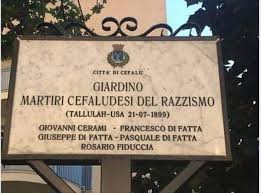
Italian Americans were second.
Yet, many Americans don’t know this troubled fact of history.
Gilda Rorro Baldassari, Ed.D, is on a mission to change this. She has compiled a comprehensive educational unit for the New Jersey Italian Heritage Commission. She seeks to secure the inclusion of Italian American experiences in the history of vigilante mob violence in America.
⸻
Law of the Hangman’s Noose
Baldassari’s work begins with a crucial premise: lynching was not random violence. It was a social phenomenon rooted in fear, prejudice, and a breakdown of trust in legal institutions. A procession of torches, pitchforks, and the hangman’s noose occurred when courts failed to punish the accused. The time to act couldn’t wait for due process. Strung up on a thick tree limb was the fate of the accused.
The target: Italian minorities.
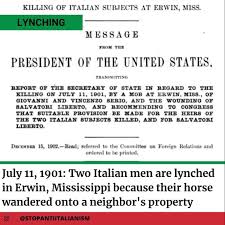
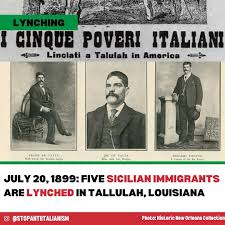
Italian immigrants, many of whom were Catholic, poor, and unfamiliar with American legal protections, sometimes met horrific deaths when blamed for a serious crime. During the 1890s, Italians were lynched on multiple occasions across the United States. States most notorious for vigilante justice against Italians were Louisiana, Colorado, and West Virginia. Incidents of hangings were often followed by official indifference.
The most infamous case occurred in New Orleans in 1891, after Police Superintendent David Hennessy was assassinated. As he lay dying, Hennessy was reported to have said, “The dagos did it.” Though the statement’s accuracy remains debated, its impact was immediate. Italian immigrants were arrested en masse, portrayed as criminals in the press, and accused of belonging to a vast conspiracy.
Despite acquittals and lack of evidence, a mob stormed the city jail. Eleven Italian men were killed.

⸻
Anti-Italian Violence
As Baldassari’s curriculum makes clear, lynchings were driven less by facts than by perception. Italians were widely described as “not quite white,” portrayed as inherently criminal, and viewed as resistant to assimilation. Public officials, newspapers, and community leaders often reinforced these stereotypes, creating an environment where violence was rationalized as civic action.
By examining Italian American lynchings alongside other historical cases, Baldassari hopes students will see how prejudice shifts targets over time.
An International Crisis—and a National Embarrassment
The New Orleans lynching did not remain a local matter. The Italian government responded by severing diplomatic relations with the United States and threatening war. Ultimately, the U.S. government agreed to compensate the victims’ families.
In the late 19th century, federal authority over civil rights was weak, and local governments continued to shield perpetrators. This reality forms a key lesson in Baldassari’s work. Vigilante violence is normalized when institutions fail to enforce the law.
⸻
Next Step—NJ Classrooms
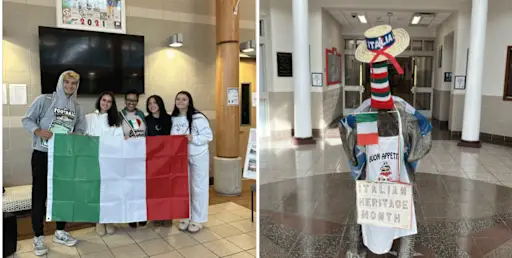
Baldassari hopes to integrate Italian American suffering into a broader, inclusive understanding of American history. New Jersey—home to one of the largest Italian American populations in the country—is uniquely positioned to lead this effort.
Students will be asked to analyze why mobs form, how group psychology overrides individual judgment, and what individuals and governments can do to prevent violence.
Through role-playing, ethical debates, and historical case studies, students confront hard questions: When does fear replace justice? Who is responsible when violence is collective? What could have been done—by officials, bystanders, or institutions—to stop it?
⸻
Hope for the Future
The lynching of Italian Americans unsettles modern assumptions. We’re reminded that groups—now considered fully “American”—were once viewed as dangerous outsiders, denied legal protection, and subjected to collective punishment.
By bringing this history into New Jersey classrooms, Gilda Rorro Baldassari, Ed.D. seeks not only to correct the historical record, but to equip future generations with the tools to recognize and resist injustice in all forms.
Editor’s Note: The web site for the New Jersey Italian American Heritage Commission is https://www.njitalianheritage.org
—————————————————————————————————————————————————————————————————————————————
Please visit our DVDs Page to shop our latest collection of DVDs on all things Italian: Films from Italy's Golden Age, Documentaries on Italian American life, ancient Rome, and religion.

Please visit our Books' page to review our latest inventory of books on all things Italian: cookbooks, history, art and culture.
Other articles to read...