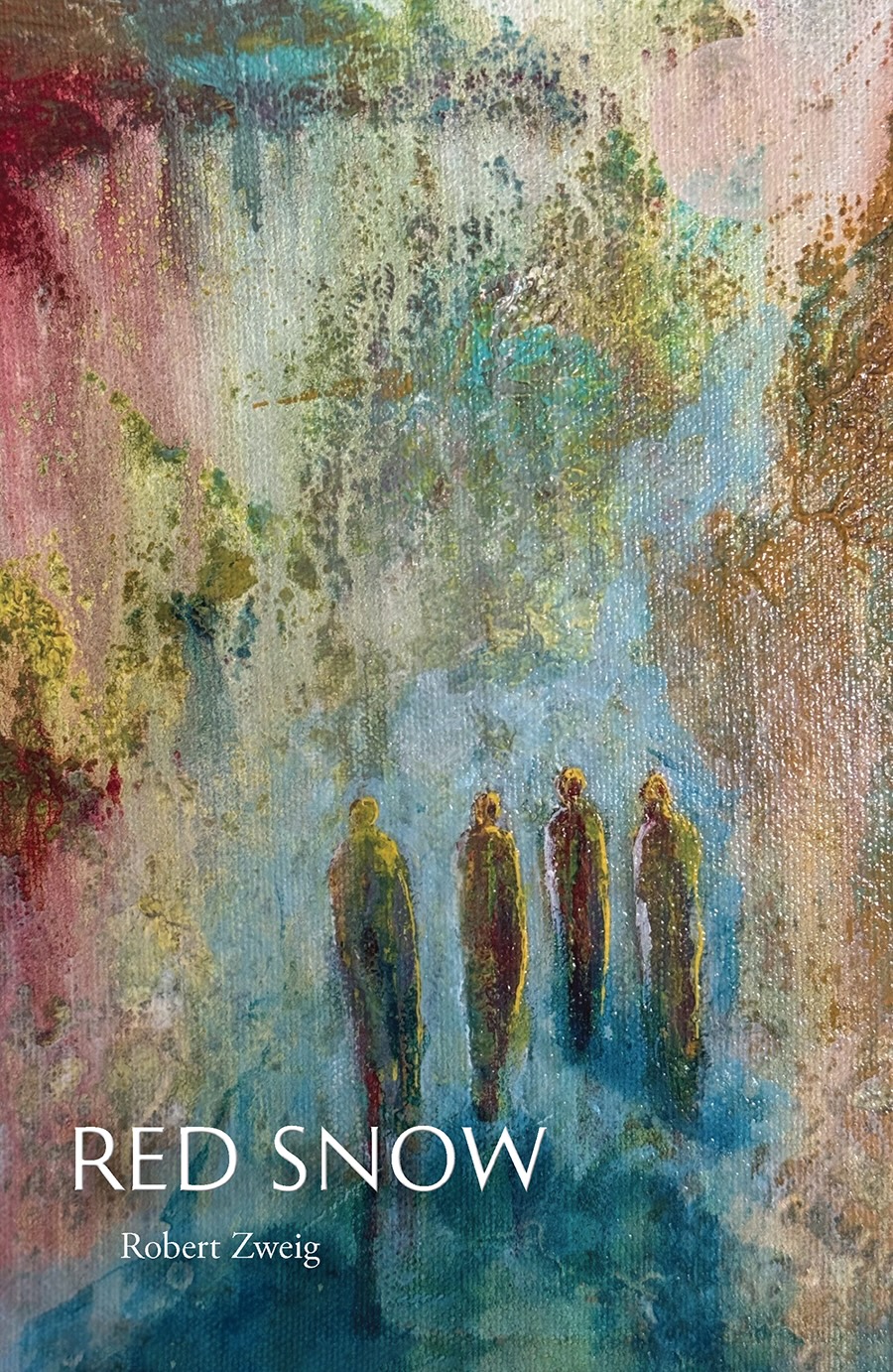
A number tattooed on an arm is the starting point for Robert Zweig’s Red Snow, an intensely personal reconstruction of his father’s survival during the Holocaust. For much of his childhood, Zweig knew fragments of what had happened to his father, Leo. He knew he had been imprisoned in a concentration camp. He knew that most of his family had perished. Yet the complete story remained obscured by silence, scattered recollections and the dark humor his father sometimes employed to keep the past at a distance.
Red Snow is Zweig’s attempt to penetrate that silence.
The story begins in Breslau, Germany, in November 1938. Heinrich and Sophie Zweig are prosperous Jewish parents raising four sons: Sigi, 18; Leo, 16; Kurt, 13; and Alfred, 9. Zweig deliberately introduces them as an ordinary family. The boys tease one another, their parents worry about them, and the rhythms of home and work continue much as they always have.
Then comes Kristallnacht.
The Nazi pogrom of November 9–10, 1938, unleashed violence against Jews and Jewish-owned businesses, homes, and synagogues throughout Germany and Austria. For the Zweigs, it marks the beginning of a descent that happens with terrifying speed. Rights disappear. The boys are forced from school. Work and movement become increasingly restricted. What makes Zweig’s account particularly effective is the family’s understandable inability to comprehend just how far events will go. Each new outrage seems almost impossible—until something worse replaces it. Eventually Heinrich and Sophie are separated from their children and deported east, where they are murdered. Their sons, meanwhile, are scattered. Sigi escapes to Palestine, while Leo and his younger brother Kurt are left to survive in a Europe that has become increasingly dangerous.
For Leo, survival repeatedly depends upon nerve, adaptability, and chance. He and Kurt encounter French prisoners while working. They eventually obtain false papers in an attempt to reach France. The Gestapo catches them. Imprisoned, beaten and kept apart, the brothers do not see one another again until they are brought before a judge.
Afterward, they are separated once more. Leo's path ultimately leads to Auschwitz.
Zweig does not romanticize his father’s endurance. Indeed, one of the most affecting observations in the book comes in the preface, where the author remembers considering his father's survival heroic. Leo himself rejected such language. He thought himself lucky.
Luck, however, is tested almost beyond comprehension as Germany collapses. With Soviet forces advancing, Leo and other prisoners are driven westward through freezing conditions. It is this terrible march—men struggling through snow while prisoners around them collapse and die—that gives Red Snow its haunting title. Leo somehow survives, eventually reaching Dachau and living long enough to see liberation.
Yet liberation is not the end of Zweig’s story.
One of the book’s most remarkable episodes occurs in the second part of the book. All members perished in the Holocaust except Sigi. Leo tries to locate his oldest brother, whom he believes is serving with a Palestine military unit in Italy. Leo travels through Treviso, Rome, and finally Naples to find Sigi. His search proves fleeting until, while sitting in a café, a British officer notices him and remarks upon his resemblance to someone he knows. That someone is Sigi. Arrangements are made, and the following day the brothers—after war, imprisonment, and years of uncertainty—are reunited.
It is in Italy that Red Snow undergoes a subtle transformation.
Naples offers Leo something that liberation alone could not provide: evidence that ordinary human existence still survives. After years in a world organized around racial hatred, imprisonment and death, he encounters the noisy give-and-take of Neapolitan street life—people talking, bargaining, eating, arguing and living. The contrast is profound. Humanity has not disappeared after all.
In Naples he also meets Gabriella Hermann. They fall in love, marry and eventually immigrate to the United States, settling in New York and beginning the new life from which Robert Zweig himself would emerge.
Zweig acknowledges that Red Snow contains reconstructed conversations, scenes and thoughts based upon family recollections and his research. It is therefore as much a son's act of reconstruction as a conventional memoir.
That may be the book's greatest strength. The Holocaust reduced millions of human beings to numbers. Leo Zweig was given one—159901—and carried it on his arm for the rest of his life. Red Snow works in the opposite direction. A son begins with that number to painstakingly restore the person behind it: a boy, a brother, a prisoner, a survivor, a husband and, finally, a father.
⸻
Where to buy the book?
You can purchase Red Snow by Robert Zweig at: Amazon.com
⸻
Primo Interview
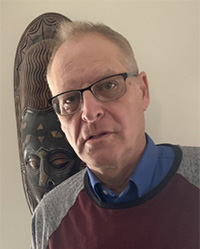
ROBERT ZWEIG
Author of Red Snow
In this exclusive interview with PRIMO, Robert Zweig discusses Red Snow, his deeply personal account of his parents' experiences during the Holocaust, the challenges of reconstructing their extraordinary story of survival, and the enduring importance of preserving family history for future generations.
Your book begins with a haunting image: the number 155901 tattooed on your father Leo’s arm. Growing up, how much did you understand about what that number represented, and what ultimately inspired you to investigate and tell your father’s story?
I came to understand the significance of the tattoo on my father’s arm in my preteen years. He had told me that he was "imprisoned" once in solitary confinement and that it was totally dark in his cell, but eventually he could see everything - an episode that I recount in the book. My father was imprisoned? The number came later; he said when he was in a concentration camp. He talked little about it, but I came to know what it was when I saw him comparing his number to another survivor's number and I asked him why he also had tattoos. He gave a brief explanation. There were mainly two impulses that inspired me to write about his - and my mother’s experiences. I realized that soon there would be no Holocaust survivors who would tell their stories. What happened would become buried, forgotten, manipulated in many ways, and abstracted as so much history is. Yet, to me what happened was very real, affecting not only my parents but me as well. Writing was a way to honor them, to not let their experiences be absorbed into a conceptual and abstruse past. In writing, I believed I would come to understand myself better as well.
You describe your father as someone who rarely spoke openly about his Holocaust experiences, sometimes using dark humor to distance himself from the past. How difficult was it to reconstruct his experiences, and what did you discover about him that you had never fully understood as a child?
My father spoke very seldom about his own experiences during the war although he read obsessively about the war for the rest of his life. Small “bits” of stories were told now and then often with humor, which in retrospect shielded me from the true nature of what he went through. “A French chef announced the delicious menu items every morning in Auschwitz.” Of course, I knew he was joking, but how horrible could his life have been, I thought, to relate it in this manner? I came to know about the camps, in part because he encouraged me to read about what happened there even though he talked little about it himself. As a child, I went to Italy every summer to visit aunts, uncles, and cousins and my maternal grandparents. Like many children, I suppose, I believed in some sense that my parents came into existence when I was born. Being in Europe drew attention to a distinctly different world they grew up in than that one I was born into. When I decided I needed to write their story, it was with a view to telling my parents’ story as well as understanding something about myself as well. Besides the snippets of accounts about the war that I heard occasionally, one very helpful thing was listening to an interview my father recorded, now stored in the Fortunoff archive at Yale University. It was the first time I heard many new details in a coherent manner. Based on my father’s and mother’s personalities and manners of thinking, I imagined much of the dialogue and circumstances related in the book. This helped me to understand them and myself better. I was very aware that there must be new ways to write about Holocaust survivors when there will be none amongst us.
One of the most disturbing aspects of Red Snow is how quickly an ordinary Jewish family's life in Breslau deteriorates following Kristallnacht in November 1938. Looking back at your family's experiences, what do you believe prevented so many German Jews from recognizing the full extent of the catastrophe that awaited them?
I don’t know for sure why the family did not move out of Germany before it was too late. I think my grandfather Heninrich could not imagine that the situation would get to the point it did. He was a World War I veteran who may have had some temporary legal advantages and exemptions up until about 1935 that protected him from the early abuses brought upon other Jews. He was also rather wealthy owning several businesses and real estate. I imagine this may have made him reluctant to leave the country and lose everything.
Your father survived Auschwitz, a brutal death march, and imprisonment at Dachau. Yet he resisted being characterized as a hero, attributing his survival largely to luck. After researching his experiences, do you agree with his assessment, or do you believe his determination, resourcefulness, and courage played a greater role than he was willing to acknowledge?
My father certainly had a strong will to survive and was courageous in certain ways. He also had a way to force himself to think optimistically, as I perceived it, during his entire lifetime. He was also very aware that many around him, including his own family were killed who may have displayed the same character traits. I always thought, though I never discussed it with him or heard him talk about it, that it would be hard to state or believe that the other members of his family lacked traits which led to their deaths. Those deaths, I imagined my father must have thought, were not due to anything other than circumstance - or luck. My father’s younger brother was on trial with him for being a traitor to the Nazi state. He was exonerated and sent to Auschwitz and killed immediately. One of the only times I saw him cry was when he related this event. How could he say that his survival after this trial was due to anything but luck? He never said this, but it is my own assessment.
Italy occupies a particularly moving place in your book. Your father traveled through Treviso, Rome, and Naples in search of his surviving brother Sigi, eventually finding him through an extraordinary chance encounter involving a British officer. What did this reunion mean to your father, and how did his experiences in Italy help restore his faith in humanity?
My father was not certain during most of the time he was in Auschwitz what had happened to his parents and younger brothers, but I think he assumed the worst. His older brother had gone to Palestine shortly before the war started, and he had a strong feeling he was alive when the war ended. I believe thinking about reuniting with him was a strong motivation to keep living during the worst times at Auschwitz and after. He found his brother in Naples after traveling through Italy. He also settled in Italy for more than one year, met mother there and married there. I believe living there and interacting with Neapolitans, many of whom had suffered themselves horribly during the war, helped him re-enter the world and look forward to his future life. All my summers as a child into the teenage years were spent in Naples visiting my grandparents, uncles, aunts and cousins. My father would join us in August, and we would travel all over Italy. He always showed a fondness for Italy and Italians, no doubt because of their spirit and attitude towards life that he experienced following his horrible experiences.
In Naples, your father met Gabriella Herrmann, the woman who would become your mother. After enduring unimaginable suffering, he found love and the possibility of a new life. What can you tell us about their courtship, their decision to immigrate to America, and the ways their wartime experiences influenced the family they eventually raised?
I believe my mother was seeing someone - an American - who introduced my father to her. My parents fell in love and got married in Naples. They honeymooned in Capri. What I heard about the wedding was that an aunt supplied some excellent African coffee she had saved for the occasion. In 1946, after the wedding they moved to New York. I don’t know much else about their courtship, but I do know that my mother had a tough time leaving her family. The immediate family all survived including a brother and sister. My uncle Bruno became an engineer, and my aunt Ada became a lawyer, and my mother was studying to be a chemist. She had no idea when she would be back to her family. It was therefore with great joy when she learned my father would be a travel agent and there was the opportunity to travel from New York to Naples at no cost or almost so. I spent every summer of my youth in Naples, the experiences of which I wrote about in a previously published book entitled Return to Naples. Nevertheless, I could see how difficult it was for my mother to leave her family when it was time for us to go back to New York.
Red Snow is not simply a Holocaust survival story. It is also a son's effort to recover the lives, personalities, and memories of family members whom history might otherwise have forgotten. At a time when the generation that witnessed the Holocaust is rapidly disappearing, what do you hope younger readers will take away from your book, and what lessons do you believe your father's experiences hold for the world today?
I would hope that young people today reading my book would understand that the freedoms that they enjoy must never be taken for granted, that hatred, ignorance, and prejudice often linger under the surface of society may slowly or abruptly burst into a horrendous force. It is important to treat others, who may not share one’s views, or religion, or cultural assumptions with respect and that you demand that of others as well. An indignity brought upon another may easily one day be brought upon you.
Editor’s Note: You can purchase Red Snow at Amazon.com
___________________________________________________________________________________________________________________________________________________

____________________________________________________________________________________________________________________________________________________
Please visit our Books' page to review our latest inventory of books on all things Italian: cookbooks, history, art and culture.