
Foot patrol officers of Italy's Carabinieri
Sono scappati!
They got away!
Armed robbers executed—in what looks to be—the crime of the year. They held up a bank in Naples, took hostages, took the money, and avoided capture by the police.
The crooks made their getaway by delving into the ancient subterranean world under Naples. Where are they now? Police don’t know.
Foot patrol officers of Italy's Carabinieri
⸻
Arenella Heist
The crime occurred on April 16, 2026, in the Arenella district, a residential quarter of Naples. At a branch of Crédit Agricole—a French bank—five masked men entered to take control of the premises. Twenty-five employees and customers were held hostage inside.
The standoff lasted four hours.
Police cordoned off the area for emergency units to move into position. The situation remained unexpectedly controlled. Despite being armed, the assailants did not carry out acts of violence. Negotiations proceeded, and by mid-afternoon all hostages had been released.
The Carabinieri then stormed the bank. Expecting to confront the perpetrators, they found… nothing. The robbers had vanished.

Naples—Italy's third largest city
______
Out of Sight Crime
Investigators soon uncovered the method behind the escape: a hole in the floor of the bank, leading to a tunnel that connected to Naples’ sprawling sewer system.
Authorities believe the passage had been prepared in advance, suggesting careful planning and familiarity with the building’s infrastructure. From there, the suspects likely made their way through underground routes, evading capture in the maze beneath the city.
The robbers targeted safe deposit boxes rather than cash, a detail that reinforces the theory of a highly organized operation with specific objectives. The value of the stolen items has not been fully disclosed, but officials suspect it could be substantial.
Witnesses reported that the robbers wore masks—some depicting well-known faces—adding an eerie, almost theatrical element to an already surreal episode. Yet beyond that detail, the operation was marked less by chaos than by precision.
Italian authorities have launched a wide-ranging investigation and manhunt. They are examining whether the group had inside knowledge of the bank or its layout. The use of underground escape routes, while rare, is not without precedent in Italy, where complex urban infrastructure can occasionally be exploited by criminal networks.
The Naples heist stands out for its execution: swift, controlled, and ultimately elusive.
In a city layered with history—much of it hidden beneath its surface—the criminals quite literally slipped into the past, leaving behind a modern mystery for police to solve.

⸻
Napoli Sotterranea
Naples is not just a city—it is a city built on top of another city.
For more than two thousand years, civilizations have carved into the soft volcanic rock beneath Naples, creating a vast subterranean world of tunnels, chambers, aqueducts, and passageways. Known today as Napoli Sotterranea—Naples Underground—this hidden network stretches for miles beneath the modern streets, largely out of sight and, in many cases, out of mind.
It is this layered, labyrinthine underworld that likely made the recent bank heist possible.
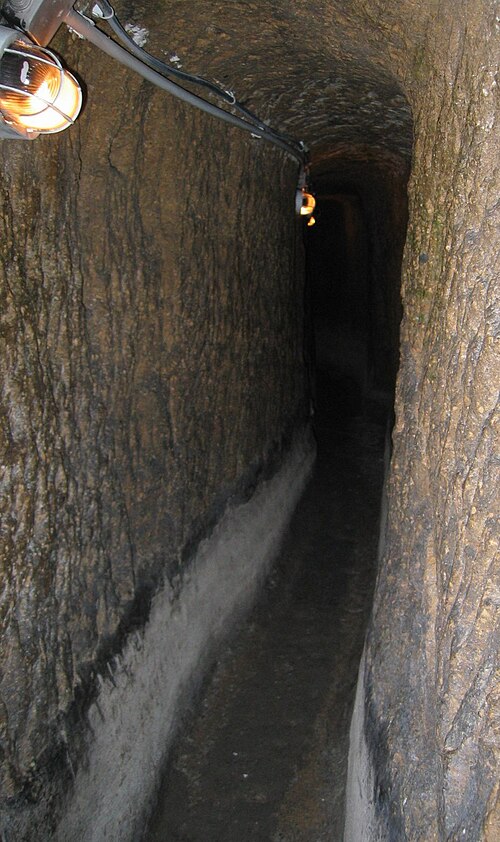
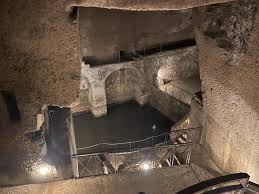
.jpg)
Images of what lies under Naples where bank robbers escaped
______
Ancient Accomplice
The underground of Naples began with the ancient Greeks, who quarried the yellow tufa stone used to build the city above. The Romans later expanded the network, transforming parts of it into aqueducts that supplied water across the region. Over time, the tunnels multiplied—adapted, abandoned, rediscovered, and repurposed.
During the Second World War, thousands of Neapolitans took refuge in these same spaces as air-raid shelters. Even today, sections of the underground remain accessible through guided tours, while others lie sealed, forgotten, or only partially mapped.
What makes this subterranean world so useful—whether for history or crime—is its complexity.
There are multiple entry points in wells, staircases, and hidden access shafts to connect surface buildings to the underground.
Old aqueducts and service tunnels link distant parts of the city. Much of the system is difficult to monitor in real time. Once someone disappears below Naples, they are entering a maze.
Investigators believe the robbers exploited a pre-existing tunnel or sewer connection beneath the bank. From there, they could move laterally through the underground network to emerge far from the scene—out of sight and beyond immediate police reach.
While the Naples heist has drawn global attention, the idea of using underground routes is not entirely new. Italy’s dense urban history—combined with centuries-old infrastructure—creates unique vulnerabilities. In cities like Naples, where past and present overlap so completely, the ground itself can become an accomplice.
Editor’s Note: To read more about the underworld of Naples, please visit: https://www.napolisotterranea.org/en/
READ HERE THE NEW EDITION - FIRST 2026 PRIMO

—————————————————————————————————————————————————————————————————————————————
Please visit our DVDs Page to shop our latest collection of DVDs on all things Italian: Films from Italy's Golden Age, Documentaries on Italian American life, ancient Rome, and religion.


Please visit our Books' page to review our latest inventory of books on all things Italian: cookbooks, history, art and culture.


Other articles to read...